On August 12, 2026, a total solar eclipse will cross Western Iceland. It is the country's first total eclipse since 1954, and Reykjavik's first in 593 years. Read on for where to watch, when totality happens by location, and how to plan around the crowds.
Visibility of the total eclipse varies across Iceland. The path of totality sweeps the Westfjords, Snaefellsnes Peninsula, Reykjavik, and Reykjanes Peninsula. The longest totality on land lasts 2 minutes 13 seconds at Latrabjarg Cliff. Reykjavik gets about a minute of darkness, while everywhere else sees a deep partial eclipse.
Booking early matters. Hotels and rental cars across the path of totality are already heavily booked, and the Westfjords have limited availability even in a normal summer. Browse 2026 solar eclipse tours in Iceland for guided trips that handle transport and logistics, or build your own trip with vacation packages or self-drive options.
Iceland is the most accessible land along the eclipse path, with the longest totality of any European destination. Whether you settle into Reykjavik for the city experience or head out to the Westfjords for the longest darkness, plan to be in position well before the moon's shadow arrives. Read on for the full guide.
Why You Can Trust Our Content
Guide to Iceland is the most trusted travel platform in Iceland, helping millions of visitors each year. All our content is written and reviewed by local experts who are deeply familiar with Iceland. You can count on us for accurate, up-to-date, and trustworthy travel advice.
Key Takeaways
-
The 2026 total solar eclipse crosses Iceland on August 12, 2026. It is the country's first total eclipse in 72 years, and Reykjavik's first in 593 years.
-
Totality peaks between 5:43 PM and 5:50 PM local time, depending on where you stand. The full event runs from about 4:47 PM to 6:47 PM.
-
The longest totality on land in Iceland lasts 2 minutes 13 seconds at Latrabjarg Cliff in the Westfjords. Reykjavik downtown gets about 1 minute.
-
Western Iceland sits in the path of totality. The Westfjords, Snaefellsnes Peninsula, Reykjavik, and Reykjanes Peninsula all see the full eclipse. The rest of Iceland sees a deep partial, with the sun more than 95% covered.
-
Iceland's next total solar eclipse will not happen until June 26, 2196.
About the 2026 Total Solar Eclipse
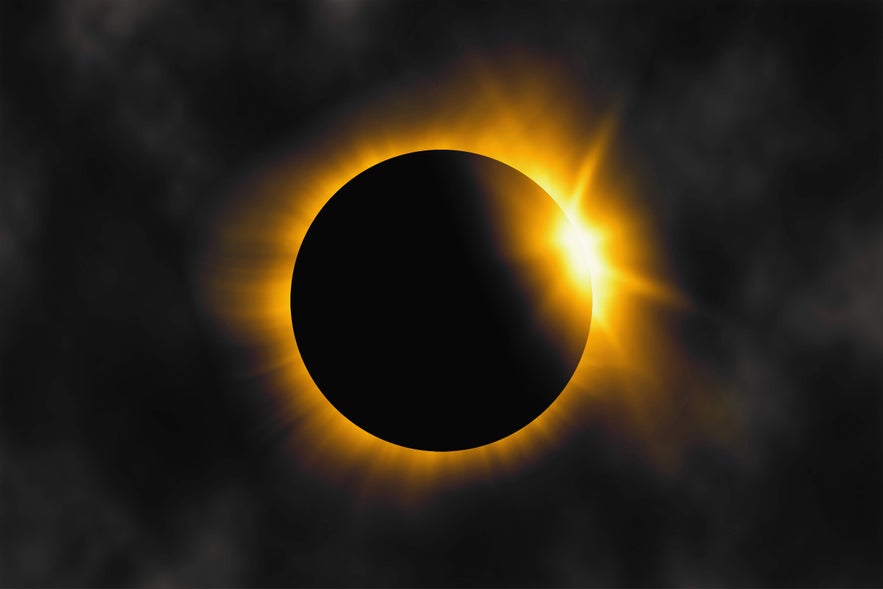
The 2026 total solar eclipse is the moment when the moon passes between the sun and Earth and blocks the sun's disc for a few minutes. The sky goes dark in the middle of the afternoon, the temperature drops, stars and planets briefly appear, and the sun's corona (the wispy outer atmosphere) becomes visible around the silhouette of the moon.
This only happens within a narrow strip on Earth's surface called the path of totality. If you are inside the path, you see a total eclipse. A few miles outside it, you see a partial eclipse instead, where the sun looks like a crescent but the sky never fully darkens.
Types of Solar Eclipses
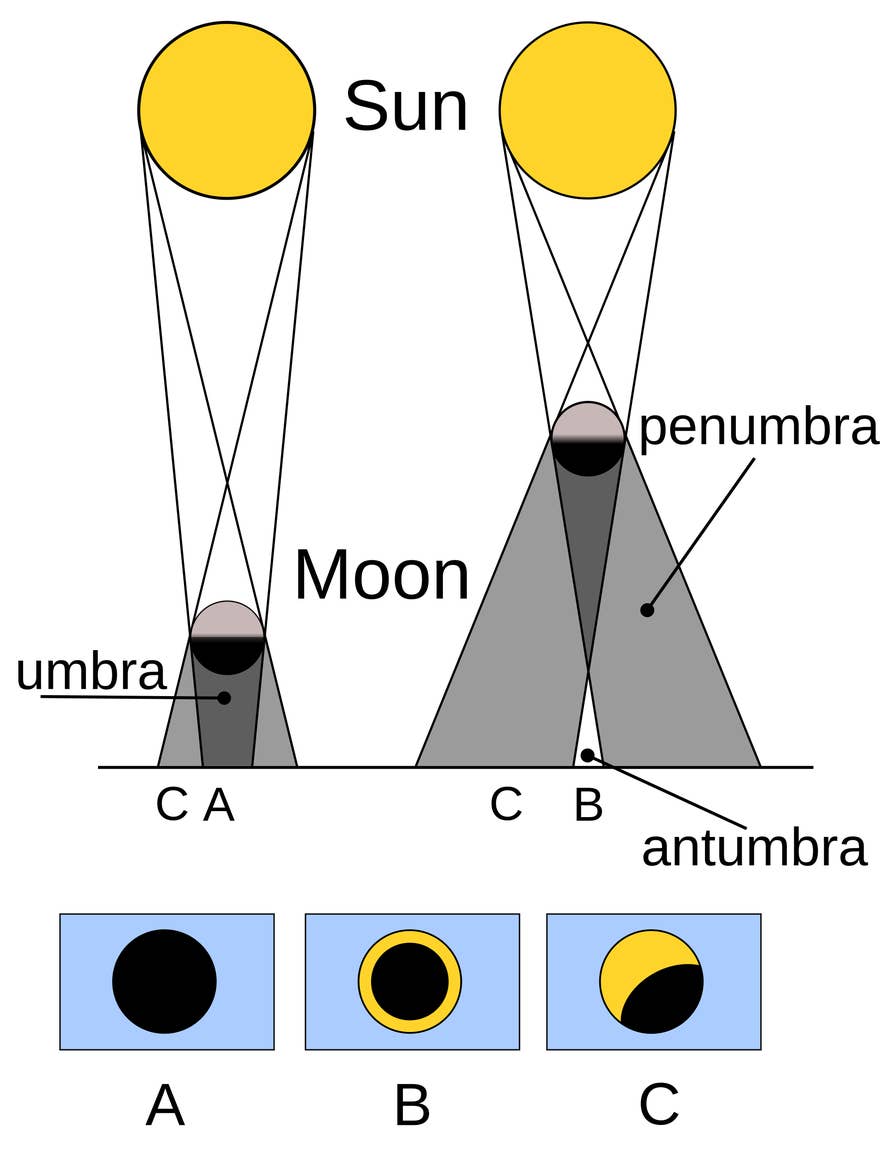
Diagram from Wikimedia, Creative Commons, by Sigmanexus6 and Setreset. No edits made.
Solar eclipses come in three types: partial, annular, and total. Each happens when the moon passes between Earth and the sun, but only a total solar eclipse, like the one over Iceland on August 12, 2026, fully blocks the sun and reveals the corona.
Here's more information about each type of eclipse:
-
Partial eclipse: Part of the sun is covered. The sky dims slightly.
-
Annular eclipse: The moon is too far from Earth to fully cover the sun, leaving a bright "ring of fire" around the dark disc.
-
Total eclipse: The moon completely blocks the sun, revealing the corona and turning day into twilight for a few minutes. This is what happens over Iceland on August 12, 2026.
Eclipse Phenomena To Watch for
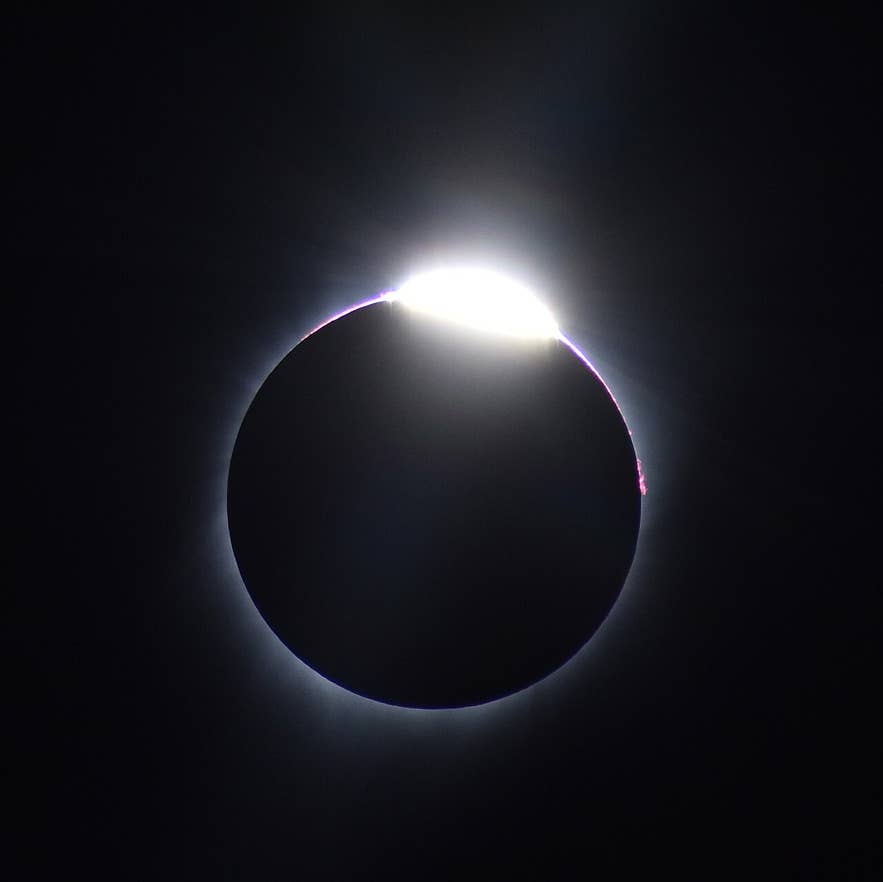
Photo from Wikimedia, Creative Commons, by Oregon Department of Transportation (Pam Strunk). No edits made.
Two visual effects bracket totality during the 2026 total solar eclipse in Iceland: Baily's Beads and the Diamond Ring. Both appear in the few seconds just before and just after the sun is fully covered. They also serve as eye-safety cues, marking exactly when it is safe to remove your eclipse glasses and when to put them back on.
-
Baily's Beads: The last thin sliver of sunlight breaks into bright points as it shines through valleys on the moon's rugged edge. Lasts about 10 seconds, right before and right after totality.
-
Diamond Ring: Just as the final point of light disappears, it flares briefly like a brilliant diamond on a ring against the dark moon. The same effect appears again when totality ends.
Both effects are safe to watch with the naked eye for the few seconds they happen. Before the first Diamond Ring and after the second one, you need certified eclipse glasses.
Path of the 2026 Total Solar Eclipse
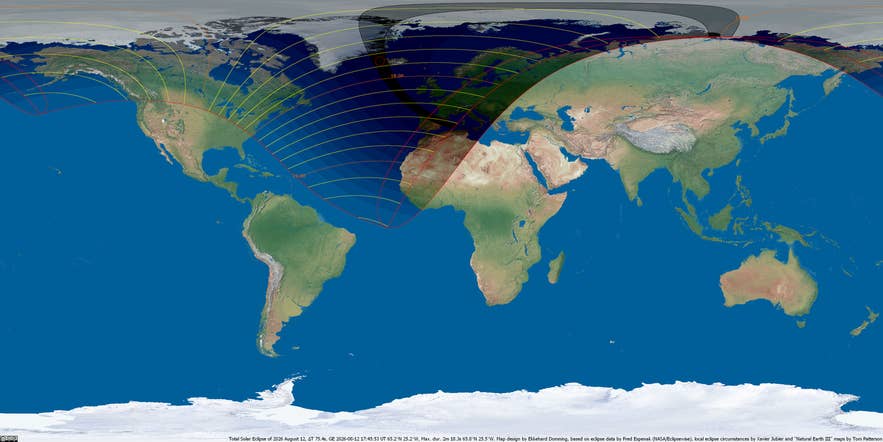
Map from Wikimedia, Creative Commons, by Ekkehard Domning. No edits made.
The path of totality for the 2026 eclipse begins in Northeast Greenland, sweeps across Western Iceland, then crosses the Atlantic to Northern Spain and parts of Portugal. Within this path, viewers see the sun fully covered. Outside the path, observers see only a partial eclipse.
The moon's shadow first touches Iceland at Straumnes Lighthouse in Hornstrandir Nature Reserve at 5:43 PM local time. From there, the shadow moves southeast across the Westfjords, Snaefellsnes Peninsula, the Reykjavik area, and the Reykjanes Peninsula before leaving the Icelandic mainland at Reykjanesta Lighthouse around 5:50 PM.
The full Iceland-side of the eclipse, partial-to-partial, runs from about 4:47 PM to 6:47 PM.
Eclipse Timing in Iceland: Phases and Local Times
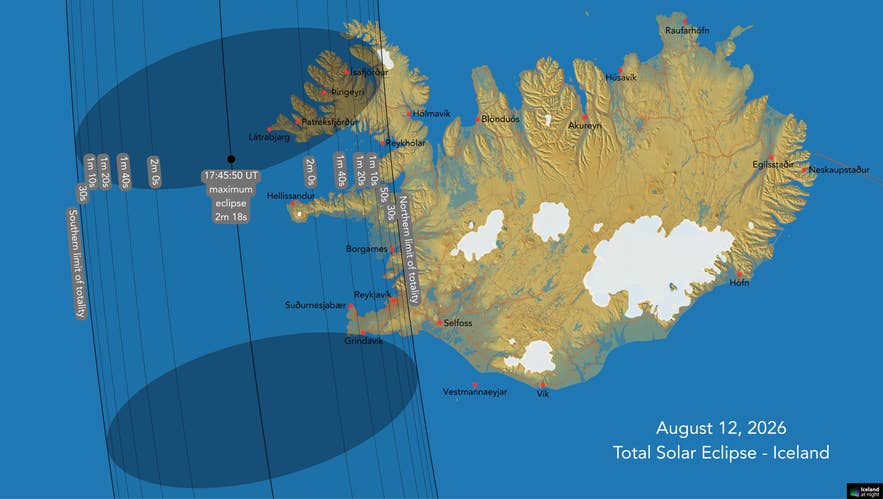
Andreas Dill & Sævar Helgi Bragason for eclipse2026.is & icelandatnight.is. No edits made.
Iceland uses GMT year-round, so the times below are both local time and UTC. The exact moment of totality varies by about seven minutes across the country, with the Westfjords going first and the Reykjanes Peninsula going last.
| Location | Partial begins | Totality begins | Maximum | Totality ends | Partial ends | Totality duration |
|---|---|---|---|---|---|---|
| Latrabjarg, Westfjords | 4:43 PM | 5:43 PM | 5:44 PM | 5:46 PM | 6:43 PM | 2 minutes 13 seconds |
| Isafjordur, Westfjords | 4:43 PM | 5:44 PM | 5:45 PM | 5:46 PM | 6:44 PM | 1 minute 31 seconds |
| Ondverdarnes, Snaefellsnes | 4:45 PM | 5:46 PM | 5:46 PM | 5:48 PM | 6:46 PM | 2 minutes 10 seconds |
| Hellissandur, Snaefellsnes | 4:45 PM | 5:46 PM | 5:46 PM | 5:48 PM | 6:46 PM | 2 minutes 7 seconds |
| Reykjavik (downtown) | 4:47 PM | 5:48 PM | 5:49 PM | 5:49 PM | 6:48 PM | 1 minute 1 second |
| Akranes, West Iceland | 4:47 PM | 5:48 PM | 5:48 PM | 5:49 PM | 6:47 PM | 1 minute 2 seconds |
| Keflavik Airport, Reykjanes | 4:47 PM | 5:48 PM | 5:49 PM | 5:50 PM | 6:48 PM | 1 minute 39 seconds |
| Reykjanesta Lighthouse, Reykjanes | 4:48 PM | 5:48 PM | 5:49 PM | 5:50 PM | 6:48 PM | 1 minute 47 seconds |
Eclipse predictions sourced from timeanddate.com, calculated from NASA Besselian Elements (Fred Espenak) and US Naval Observatory data.
The eclipse is visible from every part of Iceland, but only the western strip sees totality. The rest of the country sees a deep partial eclipse, with the sun reduced to a thin crescent that casts a silvery light across the landscape. Even in East Iceland, the sun is more than 95 percent covered. See the partial-eclipse table further down for specific cities.
Best Places in Iceland To View the 2026 Solar Eclipse
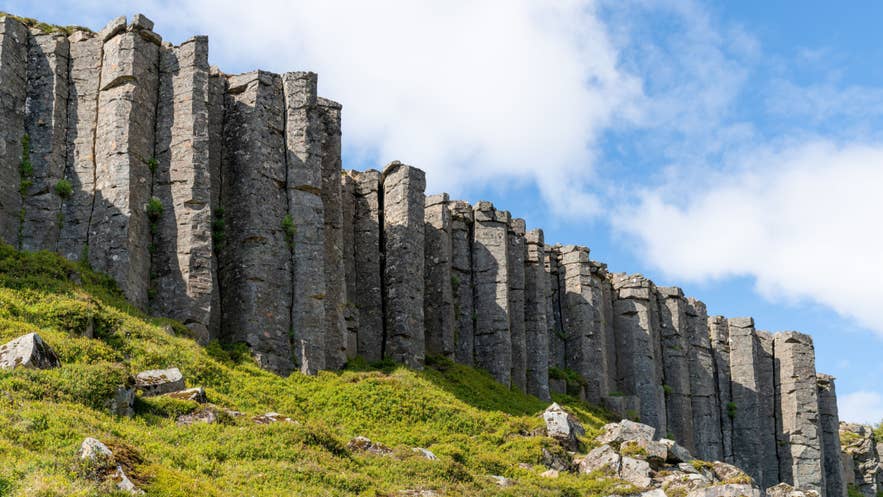
The best viewing spots in Iceland are inside the path of totality, where the sun will be sitting low in the afternoon sky. Aim for the western edge of Snaefellsnes Peninsula, the south or west coast of the Westfjords, or the tip of Reykjanes Peninsula. The further west and south you are within a region, the longer the totality lasts.
Westfjords: Longest Totality on Land in Iceland
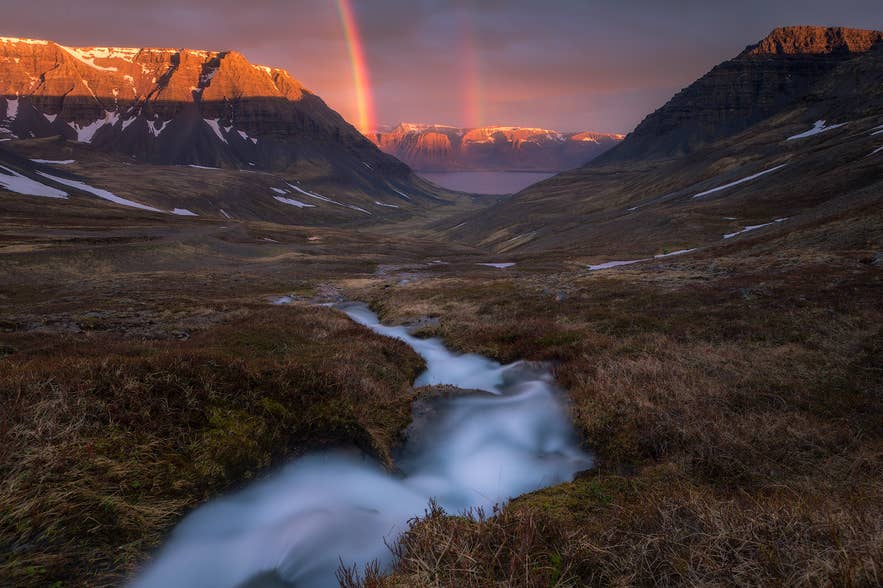
The Westfjords get the longest darkness of any region in Iceland. Latrabjarg Cliff, at the country's far western tip, sees totality last 2 minutes 13 seconds, the longest viewing time anywhere on Icelandic soil.
The Westfjords are remote. Reaching them means long drives along curving coastal roads or domestic flights to Isafjordur. The road to Latrabjarg itself is a mix of paved and gravel sections, narrow and steep in places.
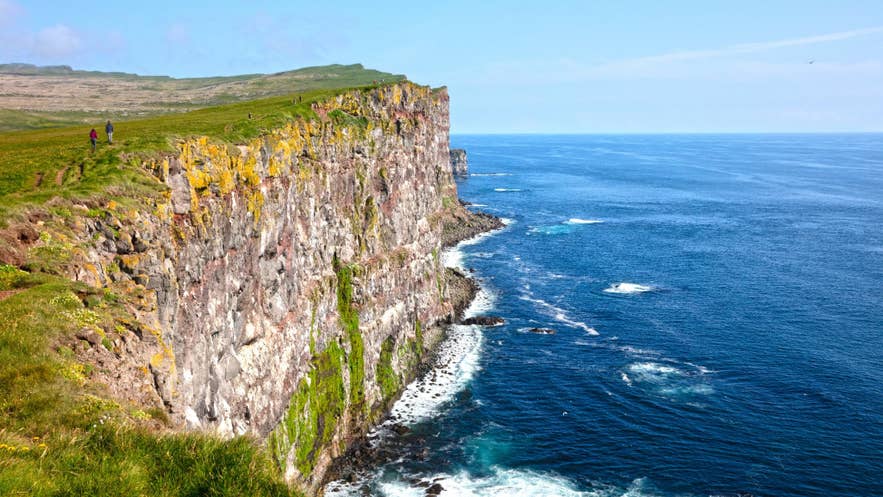
Latrabjarg's edge drops 100 meters (about 330 feet) straight to the sea, and crowds on eclipse day will be heavy. If you plan to be there, arrive a day or two early to scout your spot and watch for road congestion.
Top Westfjords Viewing Spots
Here are the most popular spots in the Westfjords for viewing the 2026 eclipse, ordered from longest totality to shortest:
-
Latrabjarg Cliff: Visibility of 2 minutes 13 seconds, which is the longest totality on land. Latrabjarg Cliff is also home to one of Europe's biggest seabird colonies, with cliffs full of gannets.
-
Breidavik Beach: Visibility of 2 minutes 11 seconds. This long west-facing sand beach is a short drive from Latrabjarg, with a small church for orientation.
-
Tungurif "Golden Beach": Visibility of 2 minutes 7 seconds. Easier to reach than Latrabjarg or Breidavik, with wide-open vistas.
-
Raudasandur Beach: Visibility of 2 minutes 5 seconds. Raudasandur Beach is a 6-mile (10-km) beach with reddish sand and endless room to spread out.
-
Gardar BA 64 Shipwreck: Visibility of 2 minutes 2 seconds. Gardar BA 64 Shipwreck is an old whaling vessel on the Patreksfjordur shoreline.
-
Krosslaug Hot Spring: Visibility of 1 minute 46 seconds. Watch the totality from Krosslaug Hot Spring while soaking in mineral-rich water.
-
Hellulaug Hot Spring: Visibility of 1 minute 36 seconds. Hellulaug Hot Spring can be your second hot-spring option right on the oceanfront just north of Flokalundur.
-
Isafjordur (regional hub): Visibility of 1 minute 31 seconds. Isafjordur is the largest town in the Westfjords, with full services and the regional airport.
-
Bolafjall Observation Deck: Visibility of 1 minute 26 seconds. It's a modern platform above the fjords with a paved viewing area.
Look at the best Westfjords hotels if you would like to stay nearby. If you are driving, check road conditions before you set out and consider 4WD rental vehicles for the mix of paved and gravel roads.
Snaefellsnes Peninsula: Iconic Landscapes Inside the Path
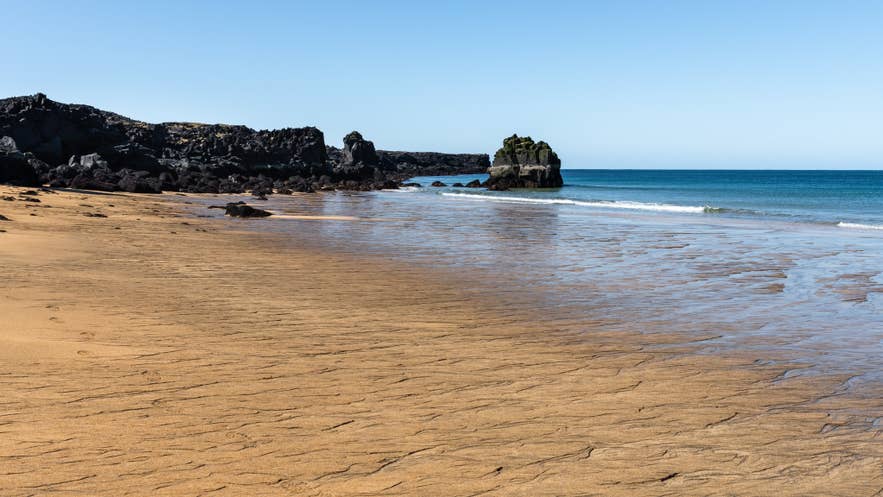
Snaefellsnes Peninsula is often called "Iceland in Miniature" because the peninsula crams glaciers, lava fields, sea cliffs, and fishing villages into one easy-to-reach loop. Towns on Snaefellsnes will experience totality on August 12, 2026, with the longest darkness at the western tip.
Where you stand on the peninsula matters more than usual for this eclipse. The sun will sit about 25 degrees above the horizon in the west-southwest at the moment of totality. That means viewpoints with a clear west-southwest sightline (the western tip and the south coast) give the best views.
North-coast spots like Grundarfjordur (where Kirkjufell Mountain stands) still see totality at 1 minute 50 seconds, but the mountains there can block the low sun. Kirkjufell is a famous landmark, but it is not the best viewing site for this particular eclipse.
Top Snaefellsnes Viewing Spots
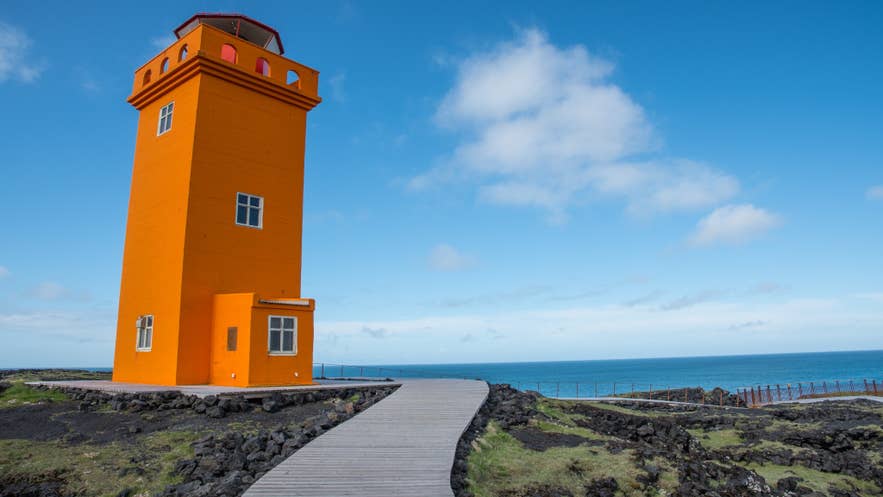
These spots along Snaefellsnes Peninsula offer clear west-southwest sightlines and the longest totality on the peninsula, ordered from longest to shortest:
-
Ondverdarnes Cape: Visibility of 2 minutes 10 seconds. The longest totality on Snaefellsnes, at the very tip of the peninsula. It has a small orange lighthouse and a rocky lava shoreline.
-
Skardsvik Beach: Visibility of 2 minutes 9 seconds. A golden-sand beach that feels Mediterranean despite the latitude.
-
Svortuloft Lighthouse: Visibility of 2 minutes 9 seconds. It's a bright orange lighthouse on rocky cliffs, with a viewing platform and seabird colonies.
-
Saxholl Crater: Visibility of 2 minutes 8 seconds. It's a volcanic crater with a walkway to the rim and a view of Snaefellsjokull Glacier.
-
Djupalonssandur Black Sand Beach: Visibility of 2 minutes 8 seconds. Black sand, dramatic rock formations, and the remains of a shipwreck are scattered on the beach.
-
Hellissandur Village: Visibility of 2 minutes 7 seconds. The fishing village is hosting the Iceland Eclipse Festival.
-
Svodufoss Waterfall: Visibility of 2 minutes 6 seconds. A 33-foot (10-meter) waterfall over a basalt cliff.
-
Olafsvik: Visibility of 2 minutes 5 seconds. This fishing town has accommodation and services.
-
Budir Black Church: Visibility of 1 minute 55 seconds. It's a remote black wooden church on the coast.
-
Ytri Tunga: Visibility of 1 minute 45 seconds. It's a golden-sand beach with a seal colony.
Iceland Eclipse Festival on Snaefellsnes
A five-day immersive festival called the Iceland Eclipse Festival runs from August 11 to 15, 2026, in and around Hellissandur on the western tip of Snaefellsnes Peninsula. Organized by IMXP and Secret Solstice, the event combines music, art, science talks, and wellness sessions across the days surrounding totality.
If you would rather take a guided trip, look at a guided 2026 total solar eclipse trip through Snaefellsnes Peninsula, or read about things to do on the Snaefellsnes Peninsula for everything the region has to offer.
Tip: Snaefellsnes is about a two-hour drive from Reykjavik on paved roads, making it the most accessible region inside the path of totality. Plan for traffic on eclipse day.
Reykjavik Area: Urban Convenience With Shorter Totality
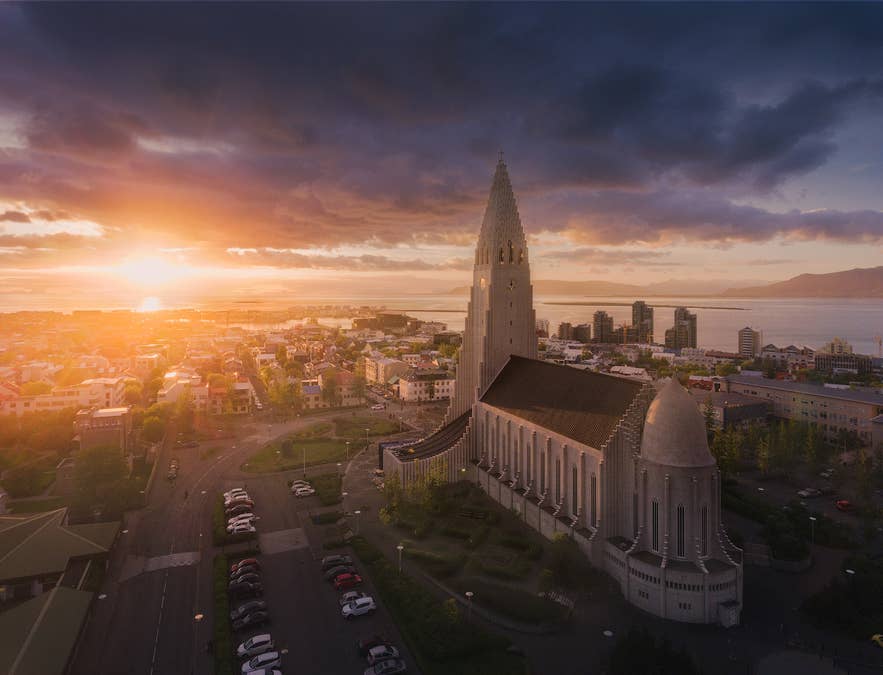
Reykjavik sits at the eastern edge of the path of totality. The capital sees totality for about 1 minute, which is shorter than the western regions. The advantage is convenience: full services, plenty of accommodation, and an easy launching point for day trips further west on eclipse day if the weather looks better elsewhere.
The sun will be low in the western sky during totality, around 25 degrees above the horizon. To get an unobstructed view, find a spot with a clear horizon to the west. Tall buildings to your west will block the view at the critical moment.
Top Reykjavik-Area Viewing Spots
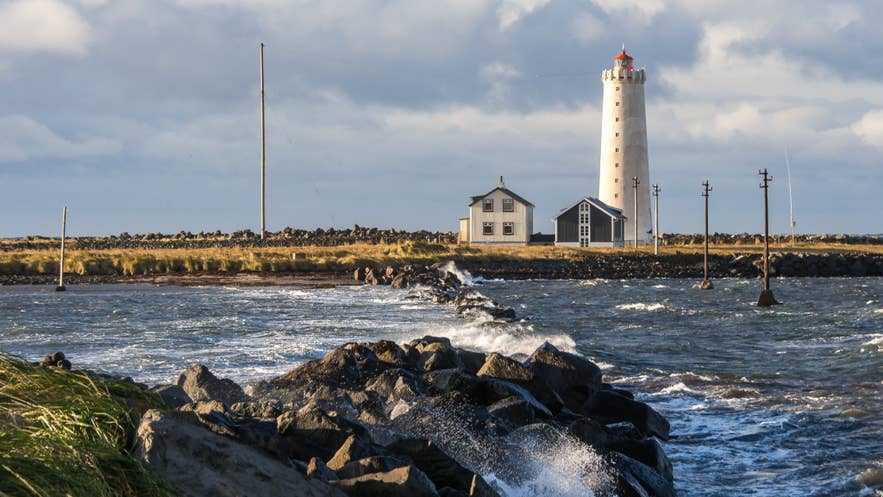
These spots inside and just outside Reykjavik offer the longest totality available in the capital area, from the westernmost edge inward:
-
Grotta Nature Reserve: Visibility of about 1 minute 6 seconds. The westernmost point of Greater Reykjavik, Grotta Nature Reserve, has a coastal walking path and an open horizon. This is the most popular Reykjavik-area viewing spot.
-
Akranes: Visibility of 1 minute 2 seconds. Akranes is a coastal town north of Reykjavik with wide open spaces and a clear west-facing horizon.
-
Reykjavik downtown: Visibility of about 1 minute. Reykjavik downtown includes the Old Harbor, Hallgrimskirkja Church, and the University of Iceland area.
-
Kopavogur, Gardabaer & Hafnarfjordur: Visibility of just under 1 minute each. These are Reykjavik suburbs outside the bustling downtown area.
-
Mosfellsbaer: Visibility of 27 seconds. Mosfellsbaer is closer to the edge of the path, so the totality is shorter.
If you are inside the path but want the longest possible darkness without driving far, Akranes and Grotta are the best Reykjavik-area picks. Both have wide, clear western horizons. Browse hotels in Reykjavik or rent a car in Reykjavik to put together a base trip with day options for the surrounding eclipse path.
For a multi-day eclipse experience that combines viewing with glacier hikes and hot springs, look at the all-women multi-day 2026 solar eclipse tour that starts in the capital.
Tip: Traffic across western Iceland will be heavy on eclipse day. Drive over the morning of, or stay overnight in nearby accommodation closer to your viewing spot. Do not plan a same-afternoon trip from Reykjavik.
Reykjanes Peninsula: Accessible Coastal Viewing
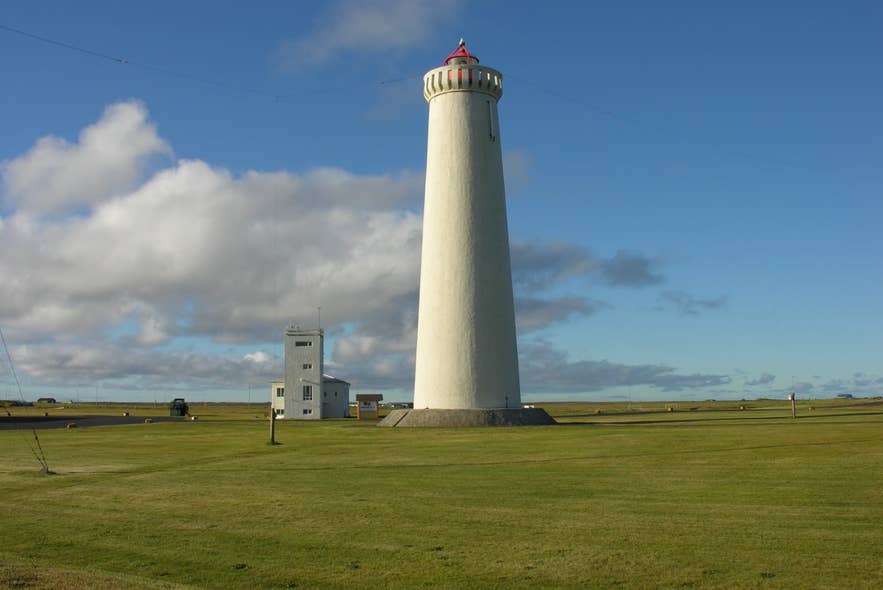
The Reykjanes Peninsula sits at the southwestern tip of Iceland and contains Keflavik International Airport, the Blue Lagoon, and a string of viewing spots along an open Atlantic coastline. Totality here lasts longer than in Reykjavik itself, and the flat volcanic landscape gives wide-open skies.
Reykjanes is about 31 miles (50 km) from Reykjavik to the airport, and another 25 miles (40 km) further to the southwestern tip. Roads are paved and well-marked. Look at the best hotels near Keflavik Airport for accommodation options, or check stays in Keflavik if you want something closer to town.
Top Reykjanes Viewing Spots

These spots on the Reykjanes Peninsula combine clear Atlantic horizons with relatively long totality, ordered from the southwestern tip inward:
-
Reykjanesta Lighthouse: Visibility of 1 minute 47 seconds. Reykjanesta Lighthouse is the last point on Iceland's mainland where the eclipse leaves the country, with cliffs facing the open Atlantic.
-
Gardur and Sandgerdi: Visibility of just over 1 minute 40 seconds. Both towns on the northern tip have wide coastal views. Gardskagi Lighthouses in Gardur are a popular spot.
-
Keflavik: Visibility of 1 minute 39 seconds. If you land that morning, you have time to settle and travel to a viewing spot nearby.
-
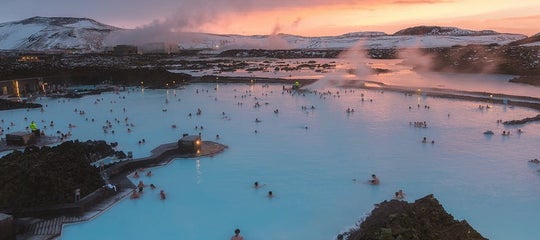
Blue Lagoon: Visibility of 1 minute 36 seconds. Watch the totality from the geothermal spa with steam rising around you.
Partial Eclipse Coverage in the Rest of Iceland
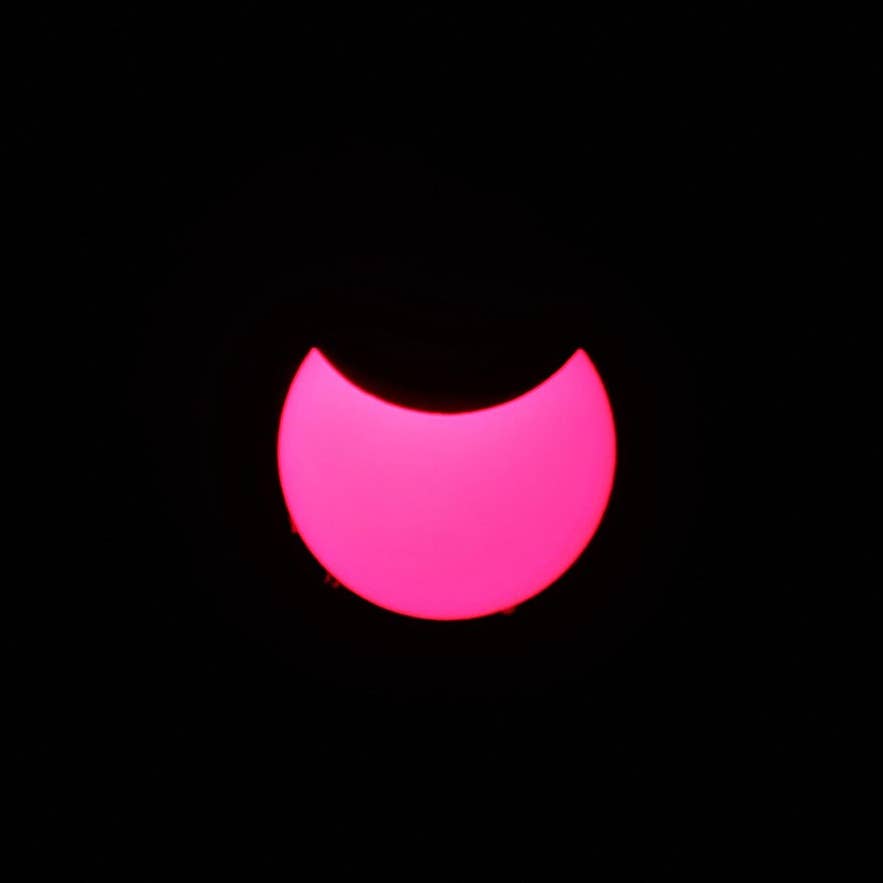
Photo from Wikimedia, Creative Commons, by Astroclubkosova. No edits made.
If you cannot make it to West Iceland for the eclipse, the rest of the country still sees a deep partial eclipse, much deeper than most partial eclipses anywhere. The sun gets reduced to a thin crescent, the daylight takes on a silvery quality, and shadows look unusually crisp. Eclipse glasses are required the entire time outside the path of totality.
| Location | Sun coverage |
|---|---|
| Vestmannaeyjar (Westman Islands), South Iceland | 99.63% |
| Highland Base Kerlingarfjoll, Highlands | 98.8% |
| Akureyri, North Iceland | 97.91% |
| Hofn, Southeast Iceland | 96% |
| Neskaupstadur, East Iceland | 95.19% |
Two villages sit right on the edge of the path of totality and are worth knowing about. Hvanneyri in West Iceland will experience totality lasting between 1 and 5 seconds, depending on where in the village you stand. Within a few meters, the difference is between full totality and a 99.99% partial eclipse.
Mosfellsdalur, just outside Reykjavik, is the other edge village.
If you are staying in a region outside the path of totality, the most flexible strategy is to base yourself somewhere with a manageable drive to the path and decide in the morning based on the weather.
Why Iceland Is an Ideal Destination To View the Eclipse
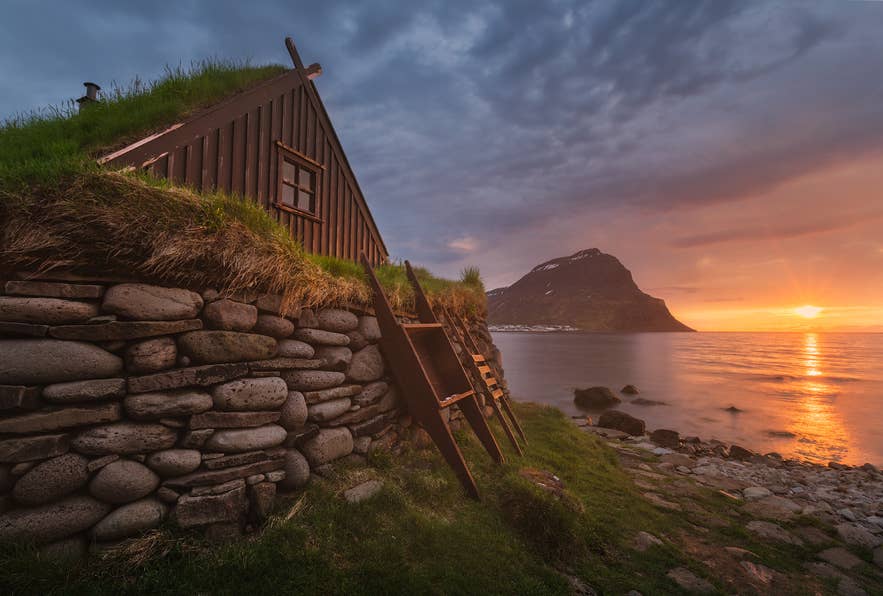
Iceland sits in the most accessible stretch of the 2026 eclipse path, with the longest totality on land, dramatic terrain that frames the eclipse beautifully, and convenient access from a major international airport. Here is why most international eclipse chasers are heading to Iceland:
-
Longest totality in Europe: Latrabjarg Cliff in the Westfjords sees 2 minutes 13 seconds of darkness, the longest viewing time on land along the entire 2026 path. Northern Spain, the other major European destination, sees closer to 1 minute 30 seconds with greater sunset interference.
-
Landscape that frames the eclipse: Black sand beaches, glacier-capped volcanoes, lava fields, and coastal cliffs all sit within the path of totality. The sun going dark above this terrain is cinematic, and photographers get unique lighting during the partial phases, too.
-
Easy access to the path: The Reykjavik metropolitan area, Keflavik International Airport, and Snaefellsnes Peninsula are all inside the path of totality. No long inland drives required. Even the Westfjords are reachable by paved coastal road or a short domestic flight.
-
Mild August weather: Average daytime highs in Reykjavik are 57 to 59 F (14 to 15 C). Cloud cover is the bigger concern: historically, August 12 has been cloudy 70 to 80% of the time. Even under partial cloud, the Diamond Ring is often visible through thin cloud, and being flexible about location makes a difference.
-
Pairs with aurora and meteor shower: Mid-August is the earliest start of Iceland's aurora season. The Perseid meteor shower also peaks on August 12 to 13. A clear night that week could line up an aurora, totality, and meteors all in the same trip.
Past and Future Total Solar Eclipses in Iceland
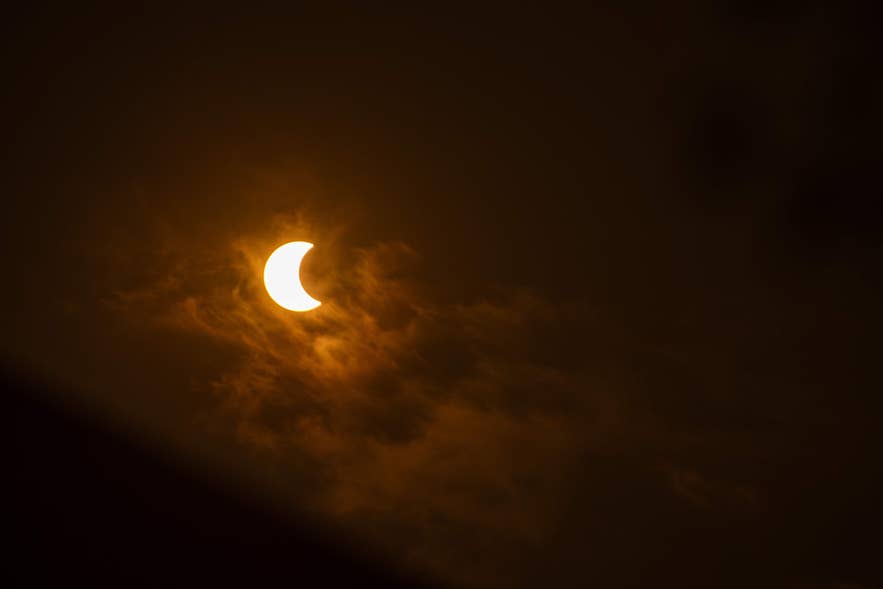
Iceland has experienced 12 total solar eclipses since the country was settled around 870, and Icelanders will see 8 more between 2026 and the year 3000. The 2026 eclipse is rare for two reasons: it is the first total eclipse visible from Iceland in 72 years (since June 30, 1954), and the next one will not be until June 26, 2196, a gap of 170 years.
For Reykjavik specifically, the rarity is even more striking. The last time the city itself was inside a path of totality was June 17, 1433. The 2026 eclipse is the first total eclipse visible from Reykjavik in 593 years.
The longest total eclipse ever recorded in Iceland was 3 minutes 40 seconds on March 30, 1131, in the Westfjords. The 2026 eclipse, at up to 2 minutes 13 seconds on land, does not quite match that, but it is by far the most accessible and best-documented eclipse Iceland will see in the 21st century.
Road Closures and Traffic on Eclipse Day
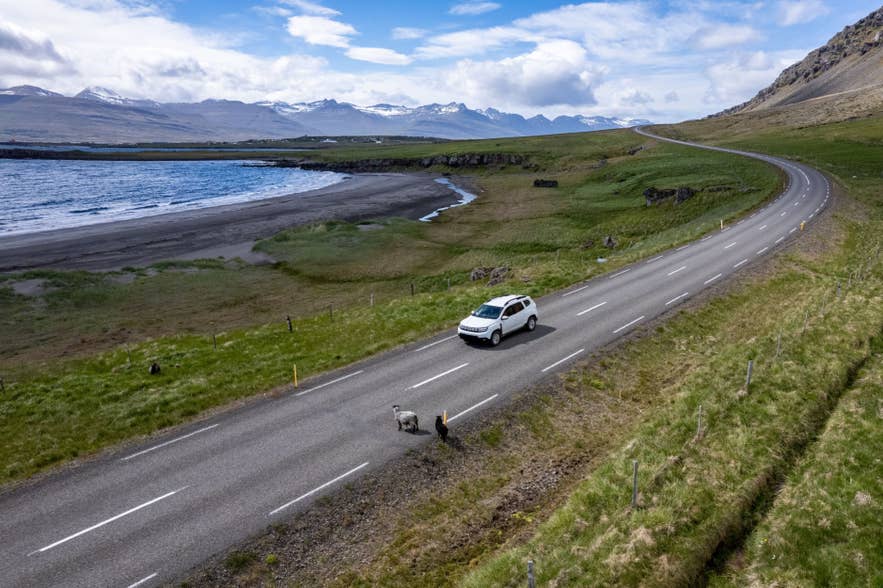 Traffic across western Iceland and the capital area will be heavy on August 12, 2026, and authorities will close or restrict several roads near the best viewing spots. The Icelandic Road and Coastal Administration begins traffic management at 8 AM and keeps it in place throughout the event, so plan your route early and allow far more travel time than a normal day.
Parking on roadways and road shoulders is banned on eclipse day, and illegally parked cars will be towed at the owner's expense. Speed limits will likely be lowered, and drivers are asked to be patient. Restaurants and other services across the west are expected to be very busy, so pack food and water for the whole day.
In the capital area, several streets close to manage the crowds:
-
Sudurgata and Aegissida, Reykjavik: Closed to traffic from 3 PM to 8 PM. Every side street off Sudurgata closes too, except Thorsgata, which stays open for access to Skerjafjordur. Aegissida closes at Hofsvallagata, Fornhagi, and Dunhagi, and Lynghagi and Starhagi close as well.
-
Sudurstrond, Seltjarnarnes: Closed from 3 PM to 8 PM between the Vivaldi field and swimming pool in the east and Lindarbraut and Nesbali in the west, with all adjoining side streets closed too.
-
Grotta lighthouse, Seltjarnarnes: Off-limits on August 12. The causeway floods at high tide during totality, and the access road closes at Lindarbraut from 3 PM.
Outside the capital, expect closures and one-way systems near the main viewing areas:
-
Reykjanes Peninsula: Traffic management is in place on Gardskagavegur (Road 45) from Nesvegur to Sandgerdi and on Vatnsleysustrandarvegur (Road 420) from Vogar to Kuagerdi, so expect restrictions and slow going.
-
Snaefellsnes Peninsula: Ondverdarnesvegur (Road 579) closes completely, with shuttle buses from Snaefellsjokull National Park providing access instead. Utnesvegur (Road 574) runs one-way from Budir to Hellissandur.
-
Dalabyggd: Klofningsvegur (Road 590) switches to one-way traffic.
-
Westfjords: Orlygshafnarvegur (Road 612) and Raudasandsvegur (Road 614) run one-way, with a speed limit of 37 miles per hour (60 kilometers per hour) as far as Breidavik and 31 miles per hour (50 kilometers per hour) from Breidavik to Latrabjarg. Only buses carrying up to 19 passengers are allowed on these roads.
Closure plans can change as the date nears. Check Vegagerdin's eclipse page for regional road updates and Safetravel for general travel conditions before you set out.
Travel Tips for the 2026 Solar Eclipse in Iceland
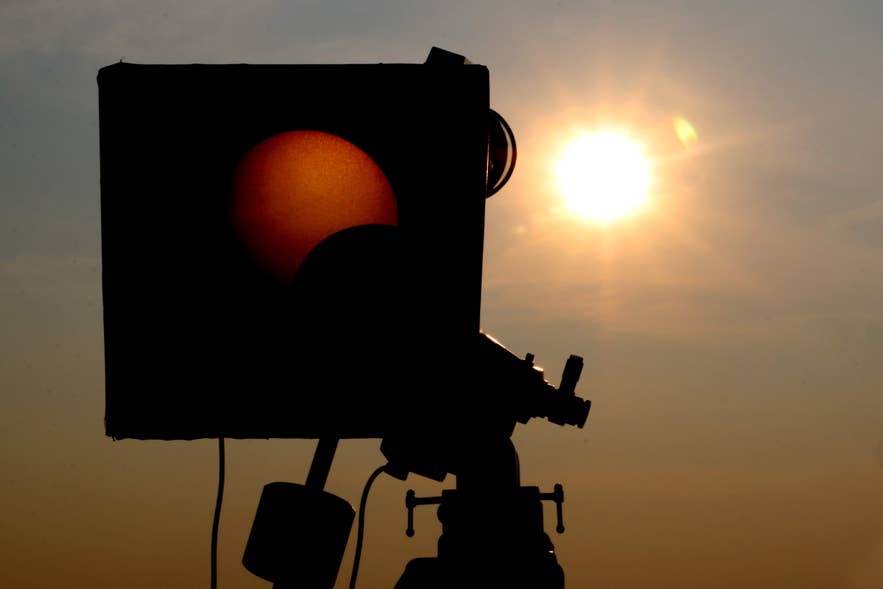
Viewing a total solar eclipse takes preparation. Even though the eclipse itself lasts about two minutes, planning to get a good spot under a clear sky takes months. Below are the practical tips that most often catch first-time eclipse travelers off guard.
-
Book travel very early: Reservations for the week of August 12, 2026 should already be made. Look at car options early, especially 4WD rental vehicles, if you plan to visit the Westfjords. Consider a guided 2026 solar eclipse tour if you would rather skip the logistics.
-
Plan for weather: Check the Icelandic Meteorological Office website in the days before August 12. Cloud cover is the biggest unknown. If your viewing site looks heavily clouded, have a backup destination an hour or two away.
-
Pack for variable weather: Even in August, Iceland can be cold and windy, especially near the coast or on hilltops. Bring warm layers, a waterproof and windproof jacket, waterproof shoes, a hat, gloves, and ISO-certified eclipse glasses. See the essential pack list for Iceland to be ready for the weather.
-
Scout your spot: Map the western horizon, and visit your chosen viewing location ahead of time if possible. You want a clear line of sight to the southwest, where the sun will be sitting low. Avoid tall mountains, buildings, or trees. This free interactive eclipse map lets you check totality timing and duration for any point.
-
Arrive early: Be at your viewing spot at least two hours before totality. If you are coming from Reykjavik or a base outside the path, drive over the night before or first thing in the morning. The partial phases start a full hour before totality and are worth watching. Local traffic will be heavy on the day.
-
Eye safety first: Never look at the sun without certified eclipse glasses (ISO 12312-2) during the partial phases. Regular sunglasses do not work. For cameras, telescopes, or binoculars, use proper solar filters on the front of the lens.
Experience the 2026 Solar Eclipse in Iceland
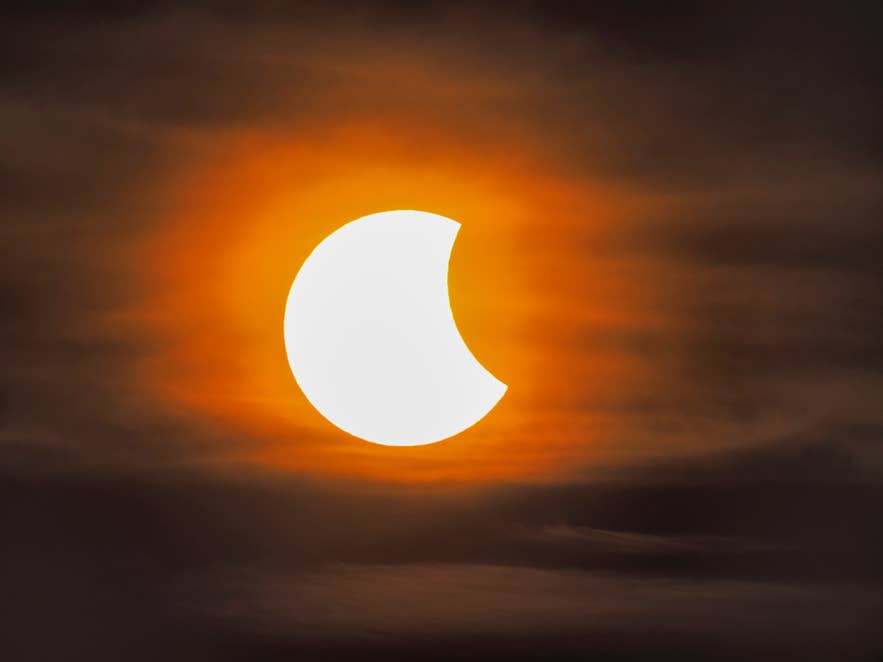
The 2026 solar eclipse in Iceland is the kind of event you plan a trip around. The combination of a long totality, accessible viewing across multiple regions, and a dramatic Icelandic landscape makes it one of the most rewarding eclipses anywhere on the 2026 path.
Plan ahead, book early, pick your spot with the western horizon in mind, and bring proper eye protection. Whether you stand in a Reykjavik park, a Snaefellsnes lava field, or a Westfjords clifftop, the few minutes of darkness will be worth the trip. While you're planning, see our guide to Iceland in August for what else is happening that month.
2026年冰岛日全食将在什么时候发生?
在冰岛哪里最适合观赏2026年日食?
如果想更方便地前往,同时获得几乎同样长的日全食观赏时间,可以前往斯奈山半岛西端。翁韦尔德斯内斯角(Ondverdarnes Cape)可观赏2分10秒,萨克斯霍尔火山口(Saxholl Crater)或迪尤帕隆桑杜尔海滩(Djupalonssandur)则可观赏2分8秒。
2026年冰岛日全食将持续多久?
在雷克雅未克能看到2026年日全食吗?
2026年之后,冰岛下一次日全食是什么时候?
如果不在冰岛西部,在冰岛其他地方也能看到2026年日食吗?
整个观赏过程中都需要佩戴日食眼镜。光线会变成银灰色,影子也会变得更加清晰,但在日全食带之外,天空不会真正变暗。
冰岛有2026年日食的导览之旅吗?
冰岛会举办2026年日食相关活动吗?
Are you traveling to Iceland for the 2026 eclipse? Where do you plan to watch from? Share your viewing plans or eclipse-chasing tips in the comments below.

I’m drawn to the creative corners of Iceland. I love helping travelers discover the unexpected side of the country, whether that’s a hidden record store, a new tattoo studio, or a dramatic filming location off the beaten path. If you’re curious, open-minded, and up for something a little different, I’m here to point you in the right direction.