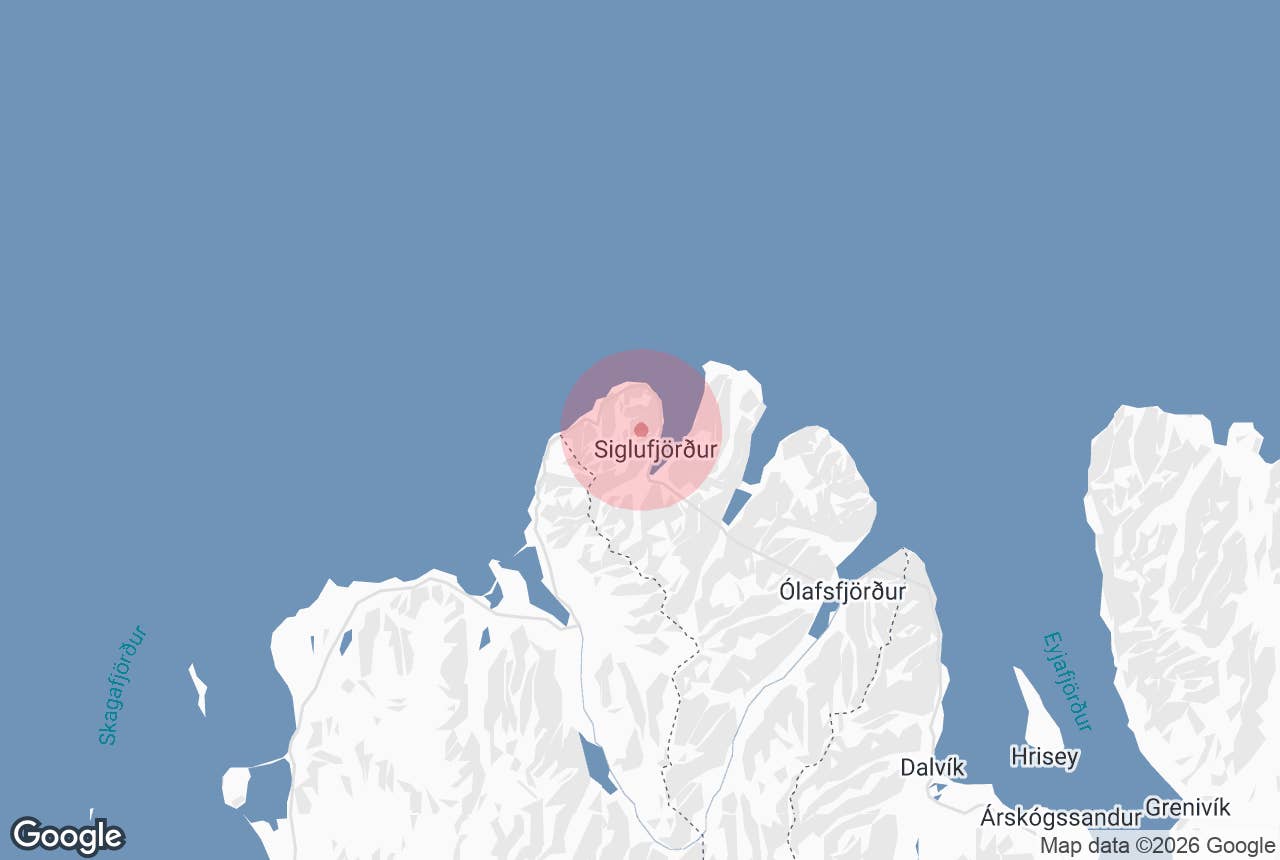
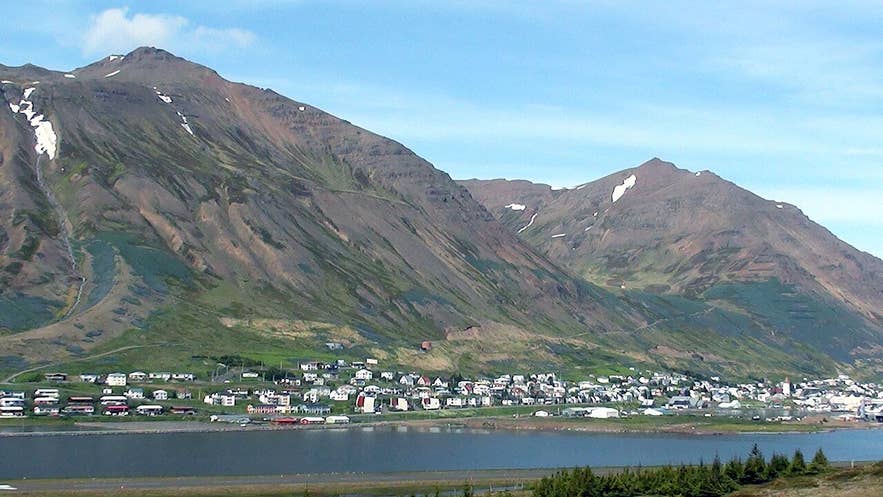
Hvanneyrarskál above Siglufjörður. Photo: Jakob Gleby, CC BY-SA 3.0
Hvanneyrarskál is a bowl-shaped mountain hollow (skál means "bowl") in the mountain wall between the peaks Hvanneyrarhnjúkur and Hafnarhyrna, directly above the western side of the town of Siglufjörður in North Iceland.
Its floor lies about 200 m above sea level, open to the north and closed on the other sides by the mountain wall; the peaks around Siglufjörður rise to 600 to 900 m.
The name comes from Hvanneyri, the old farm on whose land Siglufjörður town later grew, and is thought to refer to the angelica (hvönn) that grew in the hollow.
During the herring boom of the mid-20th century Hvanneyrarskál was the town's famous lovers' meeting place, and today it is the easiest short mountain walk from the town centre, with a wide view over the fjord.
Key Takeaways About Hvanneyrarskál
- Bowl-shaped hollow about 200 m above Siglufjörður, open to the north with a view over the whole fjord
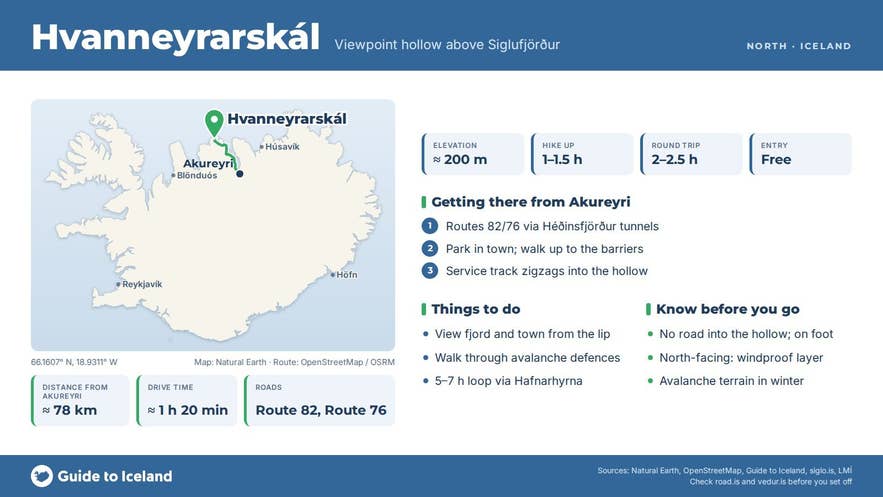
- Easy to moderate walk from town: 1 to 1.5 hours up through the avalanche defences, 2 to 2.5 hours round trip
- The herring era "romantic spot"; the New Year number has been lit on the slope here since 1952
- Free, open at all times; best June to September, avalanche terrain in winter
- Siglufjörður is about 78 km from Akureyri and about 385 km from Reykjavík on paved roads
Why visit Hvanneyrarskál
The hollow is a natural balcony.
From its lip you look straight down on the colourful houses, the harbour and the herring-era buildings of Siglufjörður, across the fjord to the airstrip and the mountains on the eastern shore, and north out to the open sea.
The climb is only about 200 m, so you get a true mountain panorama for an hour or two of effort.
Hvanneyrarskál is also part of local history.
In the herring years, when Siglufjörður was the herring capital of the North Atlantic and thousands of seasonal workers crowded the town each summer, the hollow was where young couples went to be alone, and it is remembered in songs and stories as "the romantic spot".
A New Year's Eve tradition started here: in 1947 workers from the state herring factory carried torches up to the rim of the hollow, in 1952 a group of the town's teenage boys laid out the coming year's number in oil-soaked torches on the slope below it, and from around 1960 the display was lit electrically.
The lit-up year on the mountain above town remains a Siglufjörður custom.
The walk up passes the avalanche defences built after the destructive avalanches of the 1990s: long earth dams and rows of steel supporting structures across the slopes above the houses. They are extensive and a reminder of how exposed the town is in winter. Wildlife is modest: seabirds on the fjord and birds nesting on the slopes.
How to get to Hvanneyrarskál
Siglufjörður is about 78 km (roughly 1 hour 20 minutes) from Akureyri via Route 82 and Route 76 through the Héðinsfjörður tunnels, and about 385 km (around 5.5 hours) from Reykjavík by the Ring Road and Route 76. No 4x4 is needed; the tunnels keep the town open all year.
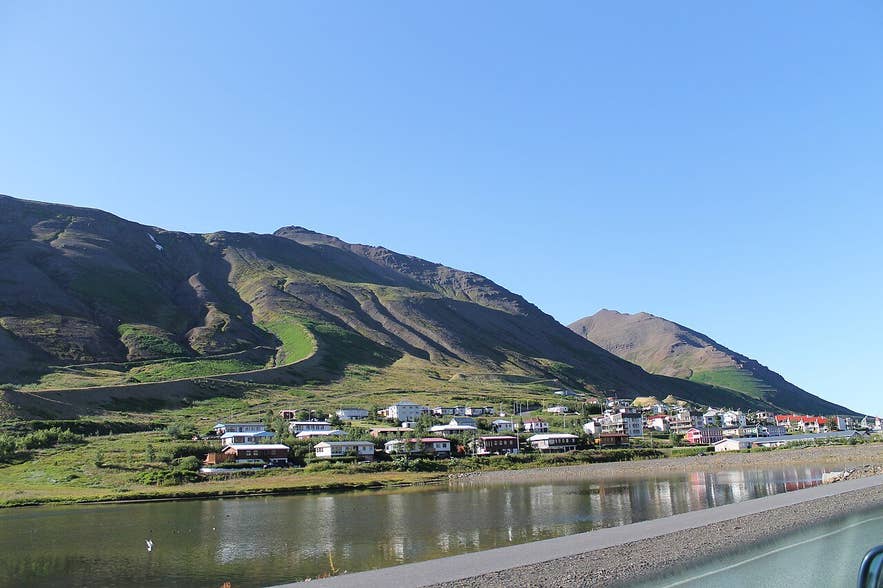
Avalanche defences on the Hvanneyrarskál route. Photo: Navaro, CC BY-SA 3.0
Hvanneyrarskál is reached on foot from the town. Walk uphill from the town centre to the avalanche barriers above the upper streets, where a service track zigzags up through the defences and continues into the hollow. The town's own guide calls the walk relatively easy.
The ascent is about 200 m and takes 1 to 1.5 hours up, 2 to 2.5 hours round trip at an easy pace with stops. Leave the car in town and walk; there is no public road into the hollow.
A longer alternative is the circular hike described by Rough Guides that starts at the southern edge of town, climbs the mountain Eyrarfjall to the Dalaskarð pass, follows the Hafnarfjall ridge to Hafnarhyrna (687 m) and descends into Hvanneyrarskál before returning down the track to town, a 5 to 7 hour day.
Best time to visit
June to September, when the track is snow-free and the hollow is green, is the best time. Late June and July give midnight-sun views over the fjord, and the long light makes an evening walk pleasant. In September the slopes turn red and gold.
The track is often walkable in May and October but expect snow patches. In winter the slopes above Siglufjörður are avalanche terrain and the route should only be attempted with local advice, in stable conditions and with microspikes.
Safety and practical tips
- Footing. The service track is gravel and easy underfoot; the final part into the hollow is on grass and rock. Sturdy shoes are enough in summer; boots and microspikes outside the summer months.
- Weather. The hollow faces north and catches the wind off the sea. Take a windproof layer and expect it to be colder than in town.
- Daylight. In spring and autumn start early enough to be down before dark.
- Facilities. None on the mountain. Shops, cafés, restaurants, toilets and the swimming pool are in town, a few minutes below the start of the track.
- Fees and hours. None; open access at all times.
- Respect the site. Stay on the track and paths to protect the vegetation and avoid disturbing nesting birds on the slopes.
Nearby attractions
- Siglufjörður – the town directly below the hollow, 1.4 km
- Siglufjörður Town Center – harbour, cafés and galleries, 1.5 km
- The Herring Era Museum – the story of the boom years that made Hvanneyrarskál famous, 1.7 km
- Folk Music Center – Siglufjörður's folk music museum and festival, 1.6 km
- Strákagöng – the 1967 tunnel west of town, 2.7 km
- Héðinsfjörður – the empty fjord between the tunnels, 8 km
Tours that visit Hvanneyrarskál
- Electric Mountain Bike Tour from Siglufjordur in North Iceland – a three-hour easy e-bike tour from Aðalgata 32 in the town centre that, conditions allowing, rides up to "the romantic spot" of Hvanneyrarskál for the view over the fjord; groups of up to five, minimum age 15, July to September.