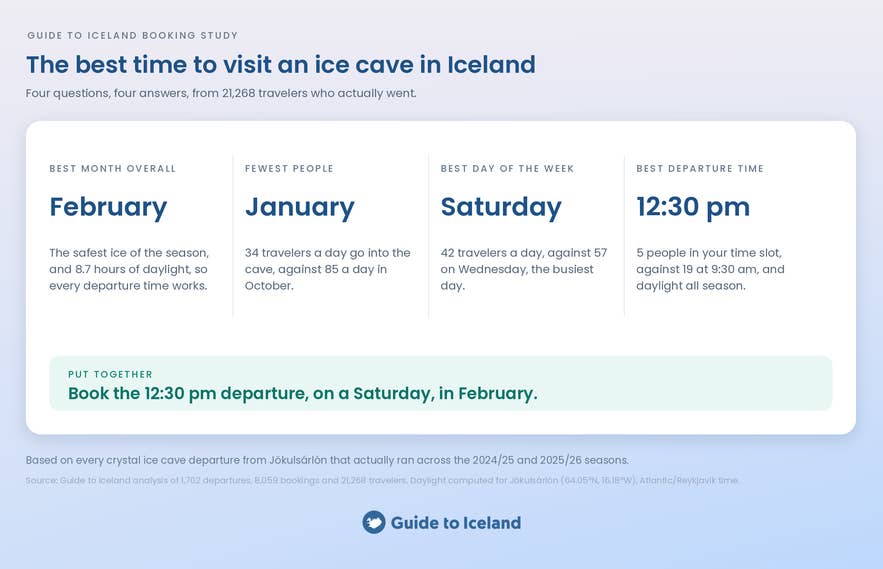
This study settles the best time to visit an ice cave in Iceland, using booking records from 21,268 travelers and the sun's own timetable rather than guesswork. It covers the safest month, the emptiest month, the quietest day, and the departure time that decides whether you see blue ice or gray.
The time of day matters more than the month when visiting ice caves in Iceland. On the 9:30 AM crystal cave tour from Jokulsarlon in December, everyone works out the same thing at once: it's still dark. Sunrise there that morning is a few minutes before eleven.
Pick your ice cave departure time before you pick your month. For ice cave tours in Iceland, the booking this study points to is a Saturday departure between 10:45 AM and 1:00 PM. That booking works in February, the month our companion study on the safest month to visit ice caves in Iceland rates highest for ice conditions. It also works in January, when the cave is at its emptiest.
Why You Can Trust Our Content
Guide to Iceland is the most trusted travel platform in Iceland, helping millions of visitors each year. All our content is written and reviewed by local experts who are deeply familiar with Iceland. You can count on us for accurate, up-to-date, and trustworthy travel advice.
How stable the ice is depends on the month. How many people share the cave with you and whether the sun is up while you are inside depends on the day and the departure time.
Guide to Iceland looked at every crystal ice cave tour that ran over two full seasons. That is 1,702 departures, 21,268 travelers, and 423 operating days. We compared them with 31 years of weather records and with sunrise and sunset times at Jokulsarlon Glacier Lagoon. Four questions about ice cave timing came out with clear answers, and the most important one is about the departure time, not the month.
Key Findings
-
February is the best month to visit an ice cave in Iceland. It is the only month where the most stable ice of the season and enough daylight, 8.7 hours, overlap.
-
January is the least crowded ice cave month. It averages 34 travelers a day against 85 in October, the busiest month, so it is 60% quieter.
-
Saturday is the quietest day of the week in the ice caves, and Wednesday is the busiest. Saturday averages 42 travelers a day and Wednesday 57.
-
Ice cave departures between 10:45 AM and 1:00 PM are in daylight every day of the season. The 9:30 AM ice cave departure, the most popular slot, is outside daylight on 43 days.
-
The 12:30 PM ice cave slot is the emptiest, but you have to look for it. It carries about 5 travelers against 19 on the 9:30 AM and runs on only 19% of operating days.
-
The ice cave booking to avoid if you care about crowds is a Wednesday in October at 9:30 AM. It stacks the busiest month, the busiest day, and the busiest slot.
Cite This Study
The charts and data in this study are free to use under CC BY 4.0. Credit Guide to Iceland and link to this page. Every chart has an Embed button underneath it with ready-to-paste code.
The Best Ice Cave Month Is February Because of Daylight
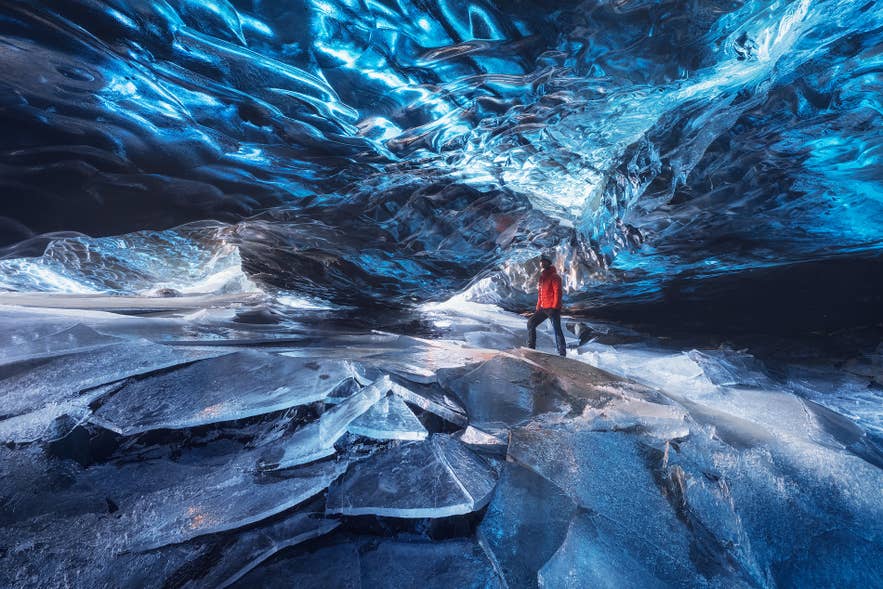 Our ice cave safety study puts February at the top of the season for physical conditions. It holds the ice below freezing on the largest share of days.
In February, ice cave ice also thaws and refreezes less often than in December or January. Each thaw and refreeze opens new cracks in a cave roof, so fewer of them means a more stable cave.
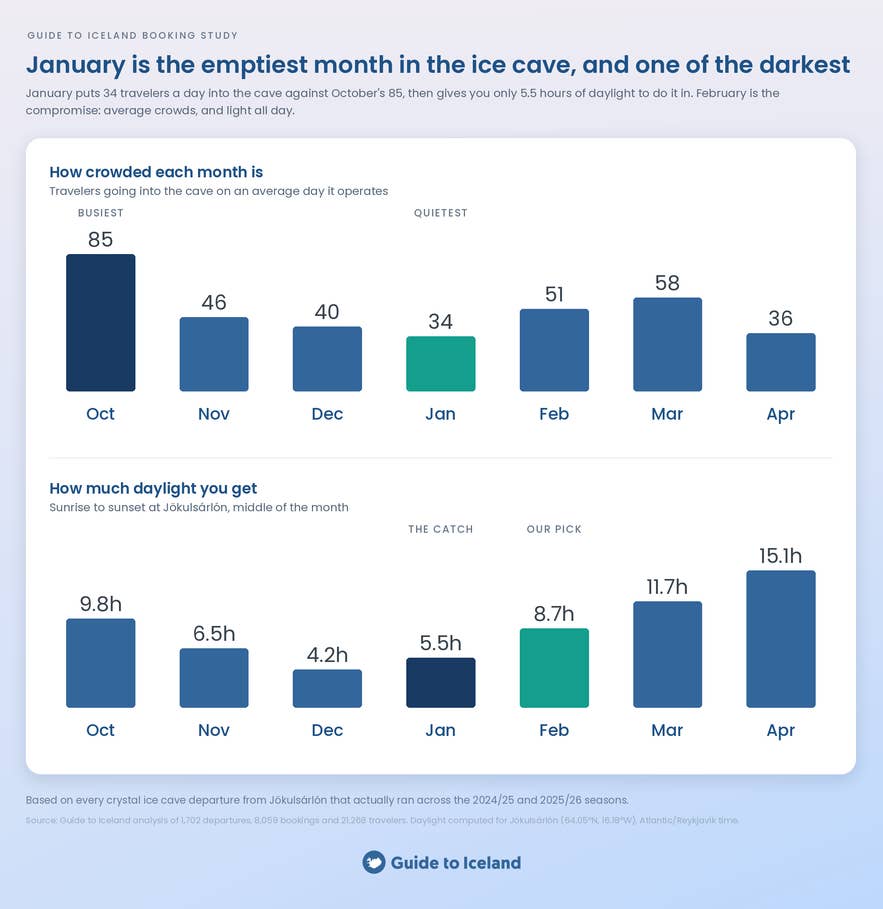
Daylight points to February as the best ice cave month too, and less ambiguously. February gives you 8.7 hours between sunrise and sunset at Jokulsarlon, against 5.5 in January and 4.2 in December.
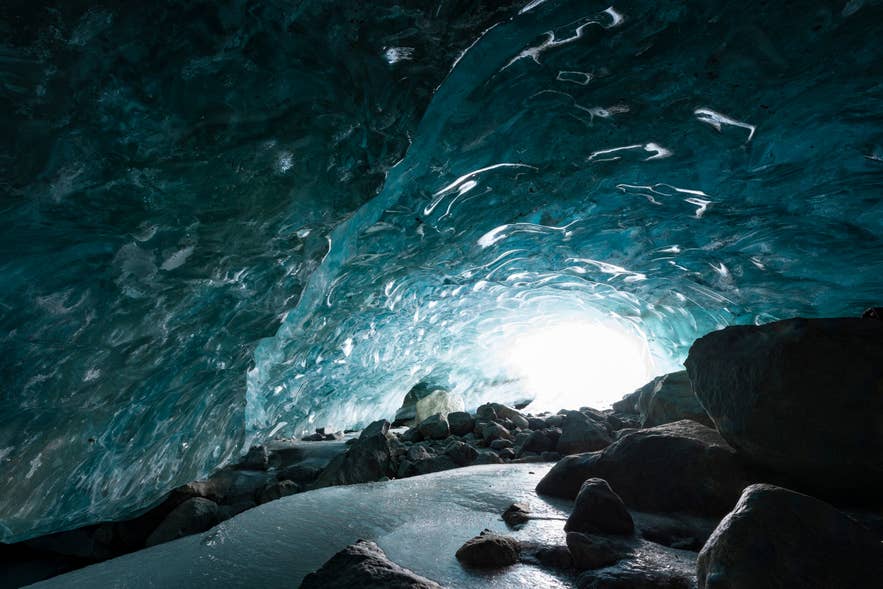
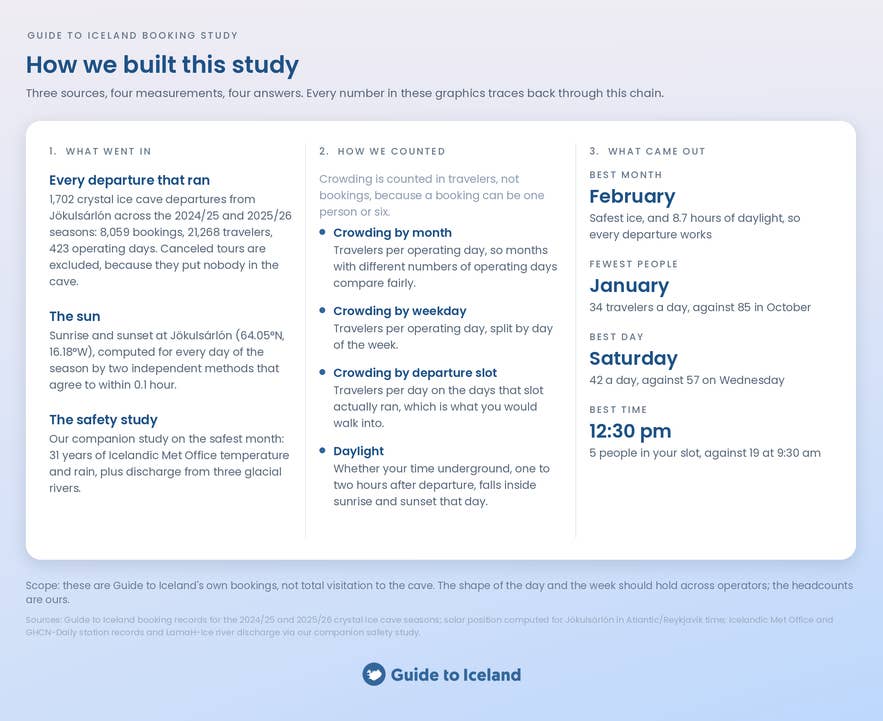
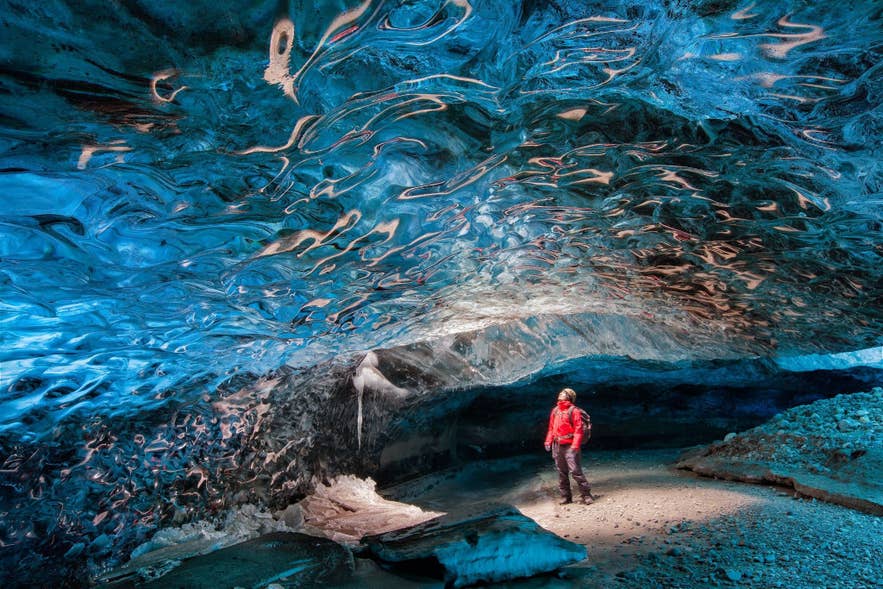
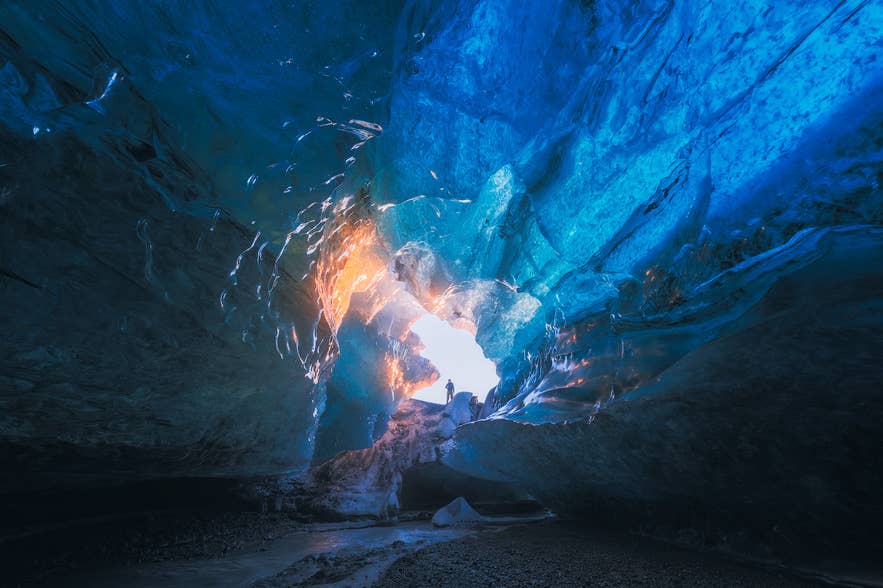
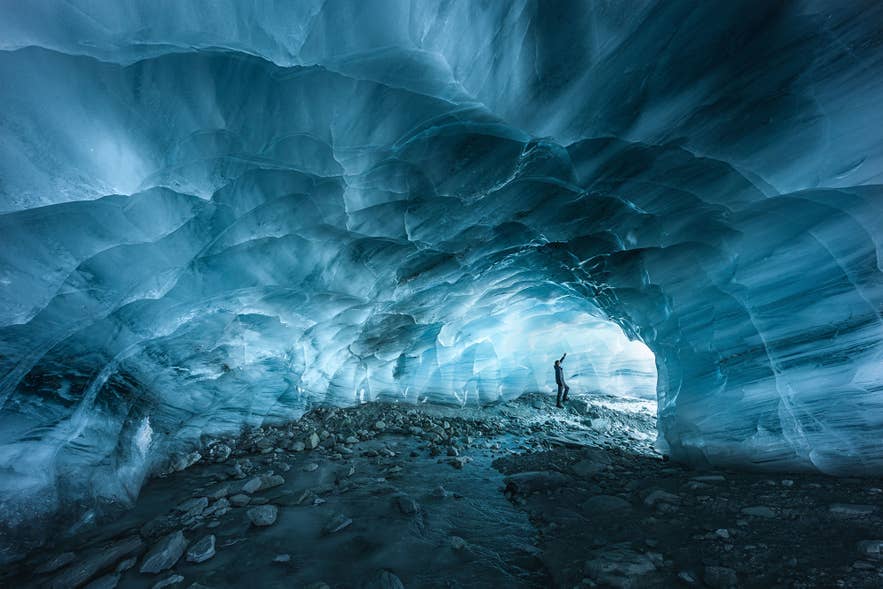
Daylight matters even more for anyone dreaming of photographing ice caves in Iceland, because an ice cave is lit from outside. The blue color people fly across the world for is sunlight passing through the thick glacier ice above you.
Without daylight, you are standing in a gray ice cave with a headlamp, and no camera setting will bring the blue back.
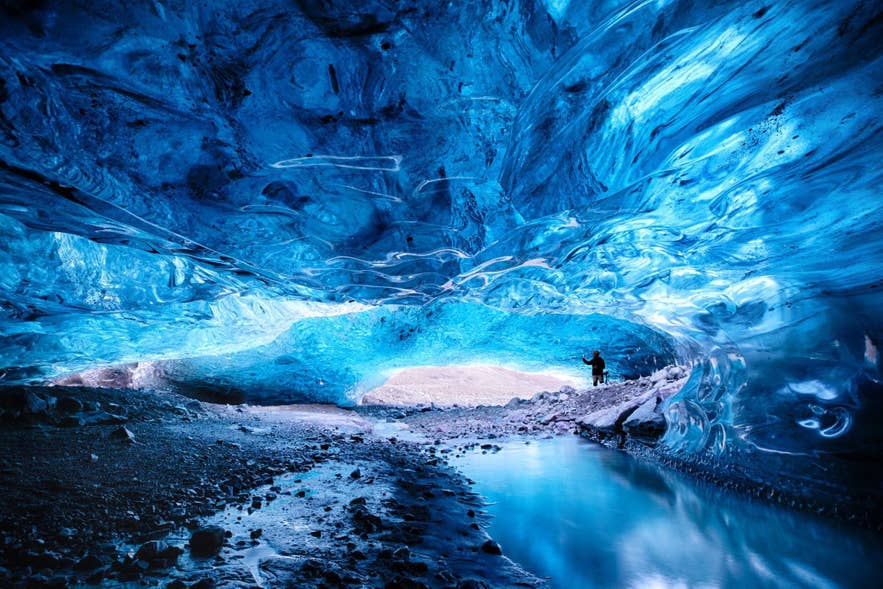 March and April have more daylight again, 11.7 and 15.1 hours, but ice cave ice is measurably softer by then. March holds below freezing on 10.7% of days against February's 18.9%. February is the point where light and cold overlap in Iceland's ice cave, and it's the only month in the season where every departure time works. The month also offers plenty of floating ice to enjoy at the nearby lagoon before or after your ice cave tour. Our study of the best time to visit Jokulsarlon and Diamond Beach found the most floating ice in February and March, adding another reason to visit the area during these months.
The Least Crowded Ice Cave Month Is January, by a Wide Margin
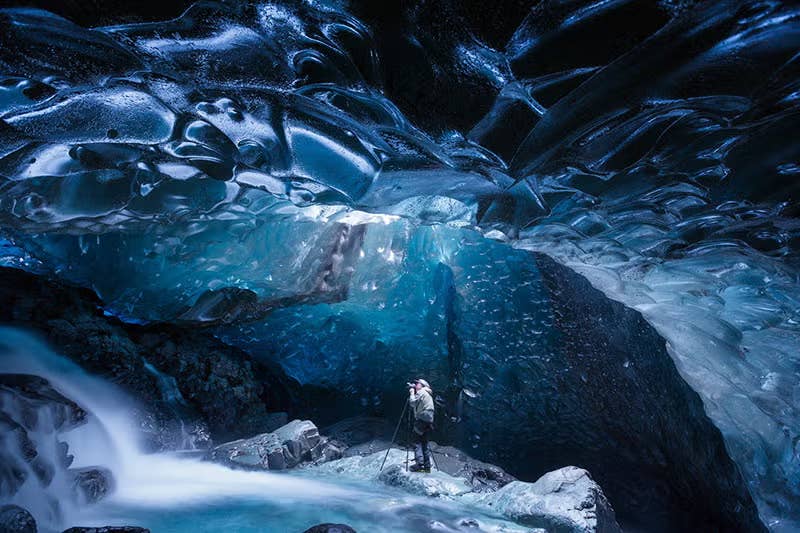 Count the people who actually walked into the ice cave on an average operating day, and the season splits in two.
October runs at 85 ice cave travelers a day, making it the busiest month of the season by a wide margin. It is also the weakest month for ice: the least cold, the most rain, and the most meltwater.
January runs at 34 ice cave travelers a day. That's 60% quieter, and January is close behind February on safety.
The other ice cave months fall in between: 58 travelers a day in March, 51 in February, 46 in November, 40 in December, and 36 in April.
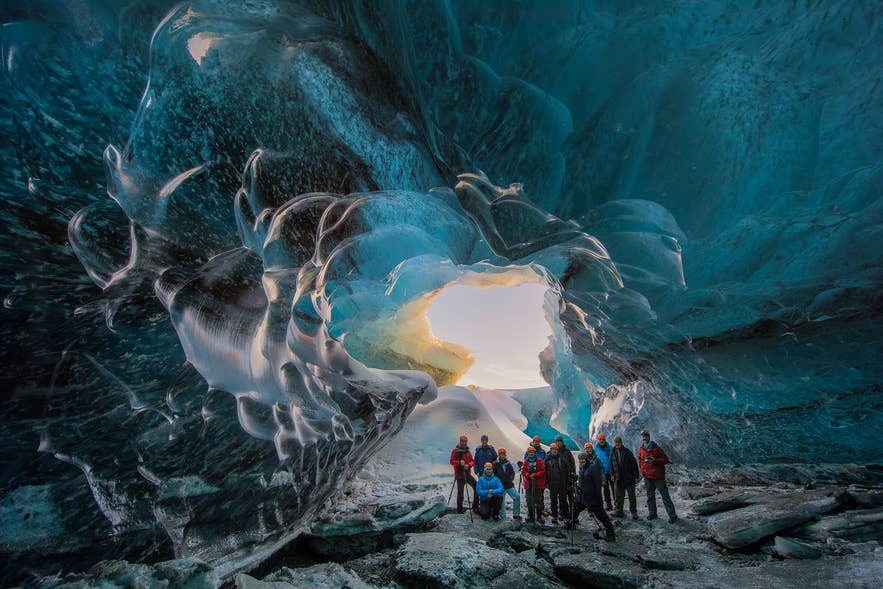 The trade-off between visiting an ice cave in February and January is simple. February gives you the best all-round conditions. January gives you an empty cave, if that matters more to you than light.
January also gives ice cave visitors something the other months don't: long nights and an empty cave in the same trip. The short days that work against you in the cave are what make the northern lights possible after dinner.
Midwinter is not the peak of the northern lights season, though. Our study of the best month to see the northern lights in Iceland puts December and January at the quiet end of the geomagnetic year and March at the top.
A dark January night still gives you a chance of catching a glimpse of the aurora, if you know when and where to see the northern lights in Iceland.
The Quietest Ice Cave Day Is Saturday, and the Busiest Is Wednesday
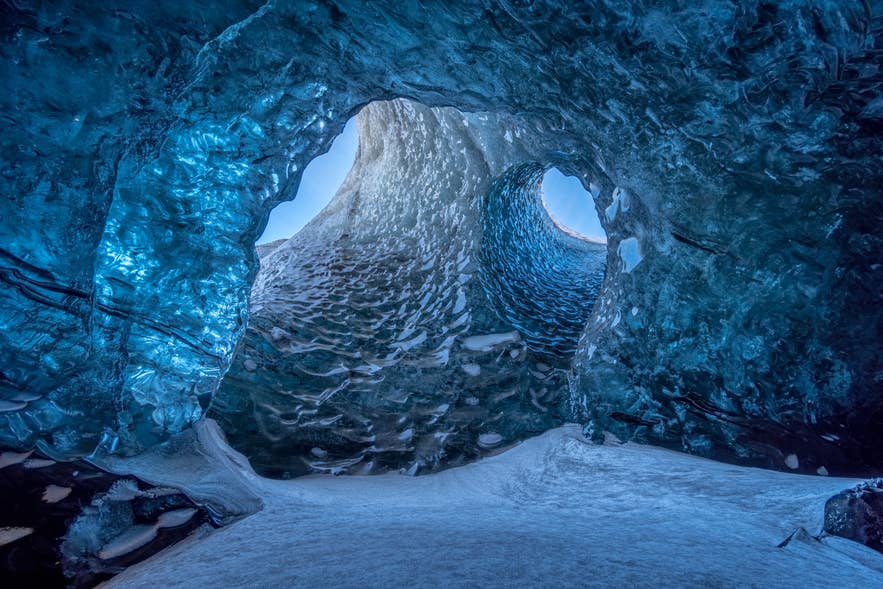 The day-of-week finding is the one most people get backwards: ice caves in Iceland are quieter on the weekend.
Wednesday is the busiest ice cave day at 57 travelers a day. Saturday is the quietest at 42, a quarter fewer. Sunday is the next quietest at 46.
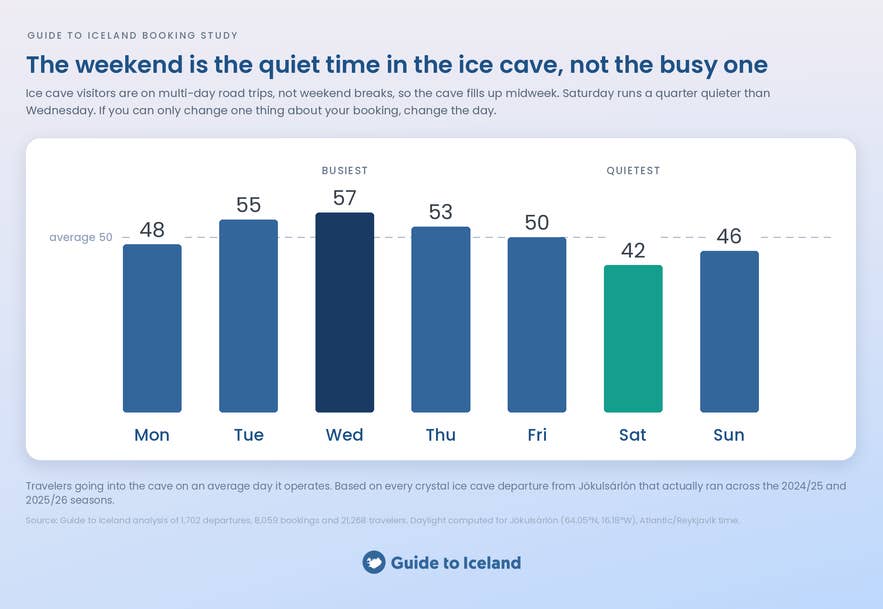
The reason ice caves are quieter on weekends is that nobody drives five hours from Reykjavik to Jokulsarlon for a Saturday outing. Ice cave visitors are on multi-day trips and self-drive tours. Those trips tend to start on a weekend and reach the southeast midweek. The cave fills up on Tuesday, Wednesday, and Thursday because that is day three or four of almost everybody's itinerary.
If you can only change one thing about an ice cave booking you are about to make, change the day. It costs nothing.
The Ice Cave Departure Time Makes the Biggest Difference
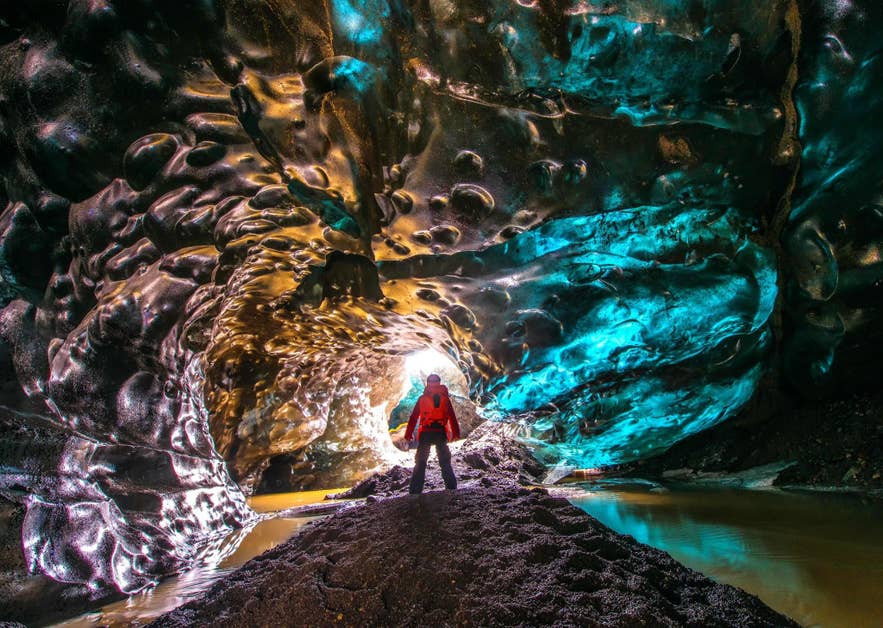 Most ice cave visitors leave at 9:30 AM or 1:00 PM. The 9:30 AM departure carries 36% of the season's travelers, and the 1:00 PM departure carries 29%. Nearly two-thirds of everyone who visits the cave walks in at one of those two moments.
The quieter ice cave tour departures sit between them. At 9:30 AM, there are about 19 people in your slot. At 11:15 AM, there are about 7. At 12:30 PM, there are about 5. That is the difference between a line at the entrance and a cave that feels like yours, for the same price.
Daylight is the second problem with the popular ice cave slots, and it falls on the same departures. A crystal cave tour from Jokulsarlon takes about three hours, with a super jeep ride at each end, so you are inside the cave roughly one to two hours after departure.
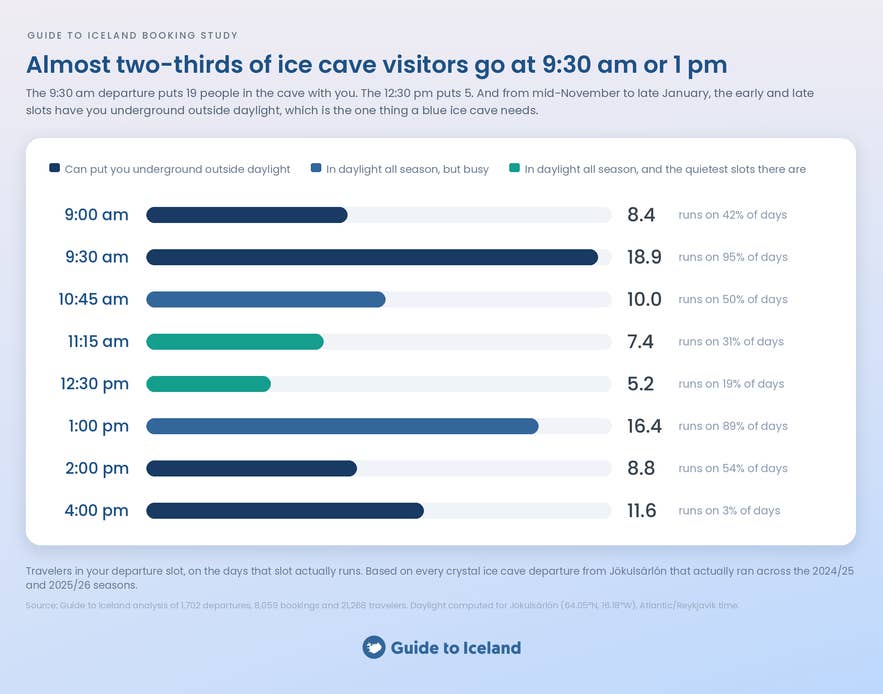
We checked that cave window against sunrise and sunset at Jokulsarlon for every day of the ice cave season. Every ice cave departure from 10:45 AM to 1:00 PM is in full daylight throughout. The earlier and later departures are not:
-
The 9:30 AM ice cave departure, the most popular of the season, is outside daylight on 43 days, from December 4 to January 15.
-
The 2:00 PM departure is outside daylight on 60 days, from November 17 to January 15.
-
The 9:00 AM departure is outside daylight on 64 days, from November 24 to January 26.
-
The 4:00 PM departure, offered on only 3% of days, is the worst of them. It is outside daylight on 134 days, from October 11 to February 21.
On December 21, the shortest day of the year, sunrise at Jokulsarlon is 10:58 AM and sunset is 3:07 PM. That is four hours and nine minutes of light in the whole day. The busiest ice cave departure of the season leaves an hour and a half before the sun comes up.
 There is one catch: the quiet ice cave slots are partly quiet because they are offered less often. The 9:30 AM and 1:00 PM departures run on almost every operating day, 95% and 89% respectively. The 11:15 AM is offered on only 31% of operating days, and the 12:30 PM on only 19%.
Midday ice cave slots exist, but they are not the default. Check a few dates rather than taking the first slot the calendar offers you.
Staying at one of the hotels near Jokulsarlon rather than driving out from Reykjavik makes a midday ice cave departure far easier to take.
The Best Ice Cave Tour Booking Is a February Saturday Between 10:45 AM and 1:00 PM
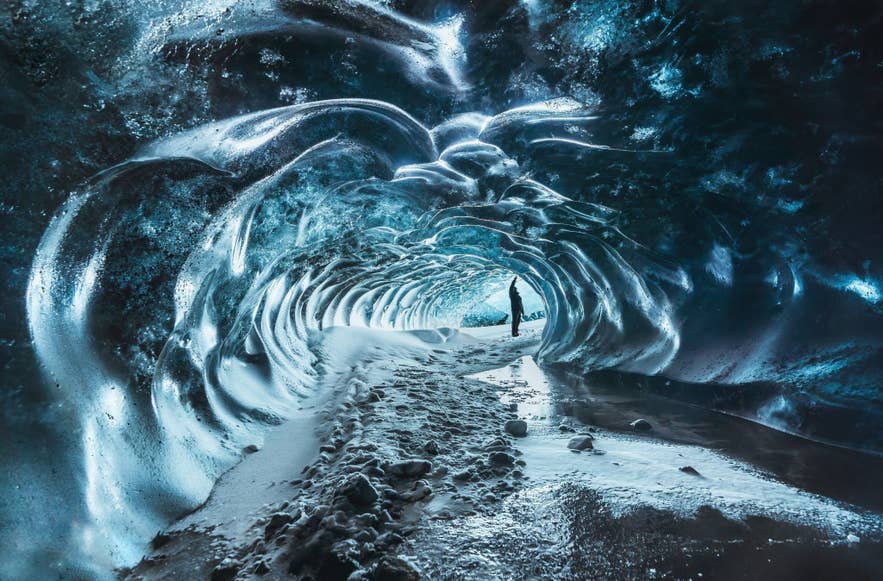 Three separate patterns point to the best ice cave slot: February, a Saturday, and a departure between 10:45 AM and 1:00 PM. That gives you the most stable ice of the season, 8.7 hours of daylight around you, the quietest day of the week, and a slot with a handful of people in it instead of twenty.
Change one of the three factors and the ice cave timing recommendation still holds up. A January Saturday in that same midday window gives you the emptiest cave of the season with the light you need. A February Saturday at 9:30 AM still gives you safe ice and daylight, just with three times the company.
The ice cave tour booking to avoid is a Wednesday in October at 9:30 AM. That combination stacks the three busiest factors at once: the busiest month, the busiest day, and the busiest slot. October is also the weakest month of the season for ice.
What This Ice Cave Study Does Not Tell You
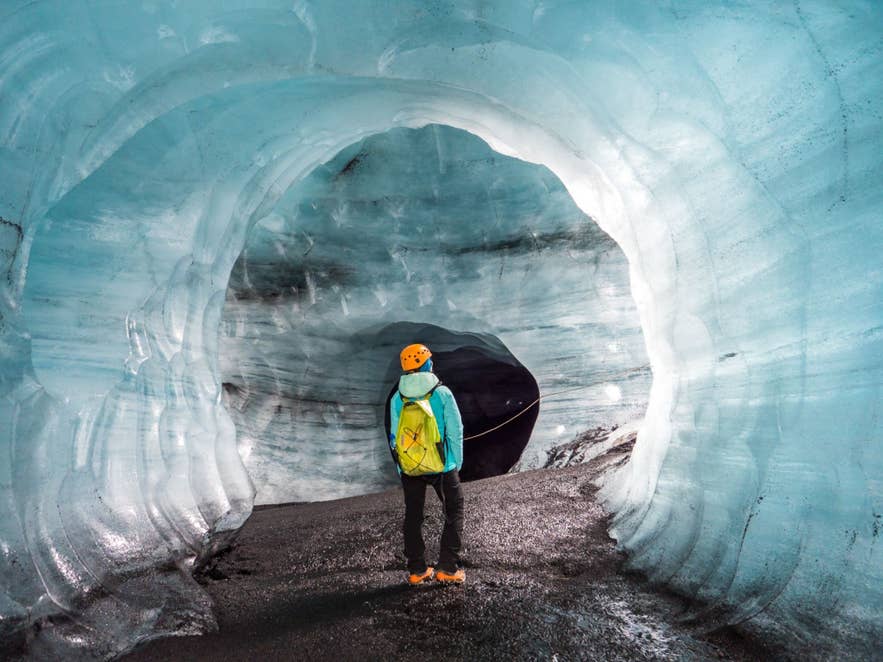 This ice cave study covers one glacier and one departure point: the crystal ice caves under Breidamerkurjokull, reached from Jokulsarlon, over two seasons. Iceland's other year-round ice cave tour, the Katla ice cave near Vik, runs on a different glacier with a different mix of visitors. None of the crowd figures here apply to it.
The ice cave crowd figures are averages. Any single day can run well above or below them, and a departure time that averages five people can still have fifteen on a clear Saturday in February. Treat the numbers as odds, not a promise.
The crowd figures count Guide to Iceland's own ice cave bookings, not everyone who visited the cave. The pattern across months, days, and departure times should hold for other operators too, but the headcounts are ours alone.
Daylight in this study means the sun is above the horizon. It says nothing about cloud, and heavy overcast will dull the blue in the ice even at midday. Our companion study on the safest month to visit ice caves in Iceland covers the weather side.
The time you spend inside the ice cave is also an estimate, one to two hours after departure. A tour that leaves late will be inside the cave later, and closer to sunset, than the figures here assume.
Ice cave tours that were canceled are not counted in the crowd figures, so this study says nothing about how likely your tour is to run at all. That is a question of ice and weather, and the safest-month study answers it.
No study can tell you which ice cave will be open on your date. Guides decide that each morning, after checking the cave in person.
Booking Your Ice Cave Tour
The findings above come down to three choices when you book an ice cave tour: the month, the day, and the departure time. Here is how they apply to popular ice cave tours in Iceland.
Trip length also affects how much flexibility you have around an ice cave tour. Our study on how many days you need in Iceland looks at trip length across different itineraries to help you plan enough time for the regions and activities you want to include.
The Crystal Blue Ice Cave Tour in Vatnajokull Glacier from Jokulsarlon is the tour this study is built on. It runs October to April and leaves from a meeting point a few minutes' drive from Diamond Beach.
Book it for a Saturday in February if you want the best all-round conditions, or a Saturday in January if you want the cave nearly to yourself. In either month, look for the 11:15 AM or 12:30 PM departure. They are not offered every day, so check a few dates, and take one if you see it.
The 9:30 AM and 1:00 PM departures are the busiest, but both are in daylight for most of the season. The exception is December 4 to January 15, when the 9:30 AM leaves in the dark. In those weeks, choose the 1:00 PM.
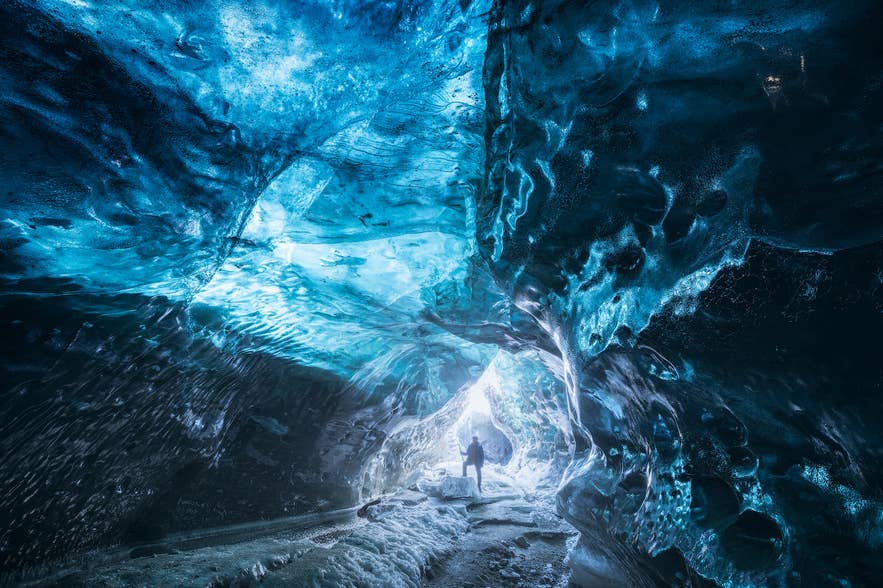 The Katla Ice Cave Tour from Vik runs all year under Myrdalsjokull Glacier, so it is the option if your dates fall outside the Vatnajokull season. It is also a much shorter drive from Reykjavik. The crowd figures in this study do not cover it, but the daylight rule does: in midwinter, a midday departure is still the one to pick.
A midday ice cave departure is far easier if you sleep nearby. The hotels near Jokulsarlon put you minutes from the meeting point instead of five hours away.
If you want more time on the ice, glacier hikes and the wider range of Jokulsarlon tours pair well with a cave visit, and a Saturday cave slot leaves the rest of the week free for them.
Guide to Iceland works only with operators who hold a valid contract with Vatnajokull National Park and whose guides carry the required certification, so every tour we sell meets the highest safety standards in Iceland.
How We Built the Ice Cave Timing Study
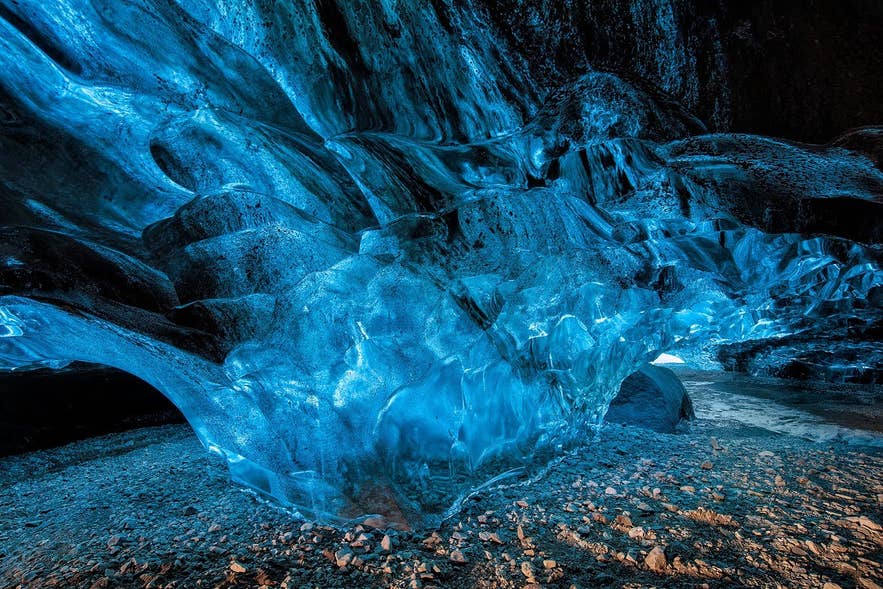 The ice cave timing study has three parts. The crowd figures come from our own booking records. The daylight figures come from the sun's position over Jokulsarlon. The ice safety findings come from our companion study on the safest month, which used 31 years of weather records.
1. Crowding: Who Was Actually in the Ice Cave
 We took every crystal ice cave departure from Jokulsarlon to the Breidamerkurjokull caves that actually ran in the 2024/25 and 2025/26 seasons, October to April. That came to 1,702 departures, 8,059 bookings, 21,268 travelers, and 423 operating days. Canceled departures are left out, because a tour that didn't run put nobody in the cave.
We count ice cave travelers, not bookings, because one booking can be one person or six. We measure per operating day rather than per month, so a month with 20 operating days is compared fairly with a month that has 30.
For each ice cave departure time, the figure is the number of travelers on the days that slot actually ran, which is the number that describes what you would walk into.
2. Daylight: When the Sun Was Up at Jokulsarlon
 We calculated sunrise and sunset at Jokulsarlon for every day of the ice cave season using standard astronomical formulas, and checked the results a second way. The two agree to within six minutes. The coordinates used were 64.05°N, 16.18°W, and all times are Icelandic local time.
A crystal cave tour takes about three hours, including the super jeep ride to and from the glacier. That puts you inside the cave roughly one to two hours after departure. We call that the cave window.
A departure time "falls outside daylight" on any day when its cave window starts before sunrise or ends after sunset.
3. Safety: How Stable the Glacier Ice Was
 The ice safety findings are taken from our companion study on the safest month to visit ice caves in Iceland. That study used three kinds of data.
The first data source is 31 years of daily temperature and rainfall from the Icelandic Met Office weather stations at Skaftafell and Kvisker, plus the older station record from Hofn i Hornafirdi.
The second data source is monthly river flow from gauges on the Skafta, Hverfisfljot, and Djupa rivers, which carry meltwater off the glacier. The gauges are run by the Icelandic Met Office and by Landsvirkjun, the national power company.
The third data source is our own booking records, which the safest-month study uses to measure how often tours were canceled in each month.
Conclusion
 This study asked four questions about ice cave tours in Iceland and found four clear answers.
February is the best ice cave month, because 8.7 hours of daylight and the hardest ice of the season overlap there. Our safest-month study makes the full case for it. January is the alternative if an empty cave matters more to you than light, at 34 travelers a day against October's 85.
Saturday is the quietest ice cave day, a quarter quieter than Wednesday. A departure between 10:45 AM and 1:00 PM is the best ice cave slot, in full daylight on every day of the season and with a handful of people in it rather than twenty.
The day and the departure time are the two parts of an ice cave booking most people never think to change, and they cost nothing. The 9:30 AM fills because it's the default, and the midday slots stay quiet because you have to look for them. Check a few dates before taking the first slot the calendar offers. If you can, stay near Jokulsarlon the night before so a midday departure is easy to make.
The ice cave itself is still checked by a guide on the morning you go, not by a study. Treat this study as a way to choose your booking, not a way to judge the ice.
Book ice cave tours early for January and February, since the crystal caves sell out weeks ahead. Leave a spare day in your itinerary, because a storm can shut the south coast road at any point in an Icelandic winter. And dress for a glacier hike rather than for the car.
Have you been inside an ice cave in Iceland? Which month, day, and departure time did you pick, and how many people were in there with you? Tell us in the comments below.

Guide to Iceland Editorials is the shared byline for our content team. We use it on pieces several people worked on together, where no single writer owns the article, and on anything rewritten often enough that a personal byline would be misleading. We also publish our original data studies under this profile. Each study answers a question travelers ask about Iceland, using primary sources such as booking records, traveler reviews and public datasets, and every study is quality checked by human experts before it's published. Everything under this byline is researched and reviewed by people who live and work in Iceland. If you spot something out of date or want to suggest a correction, message us and it reaches the whole team.