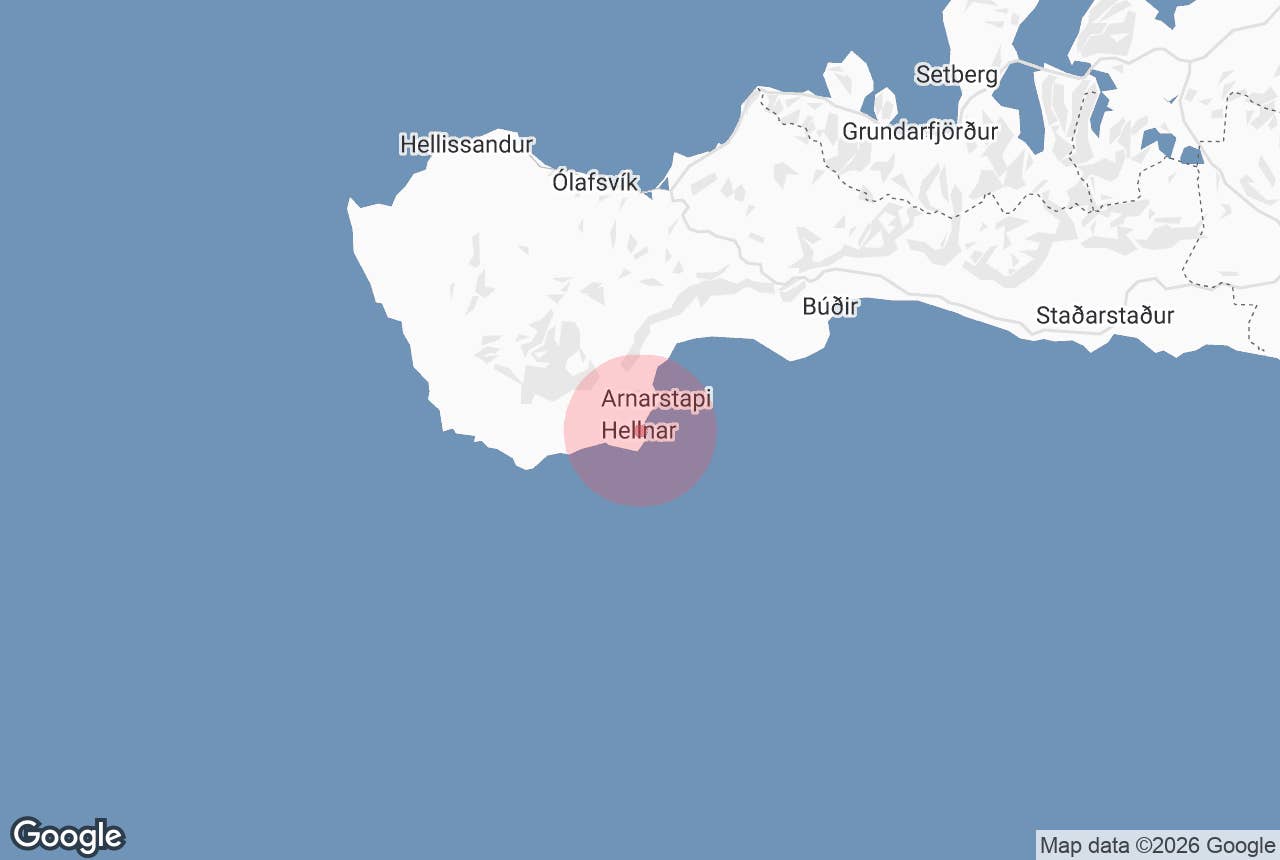
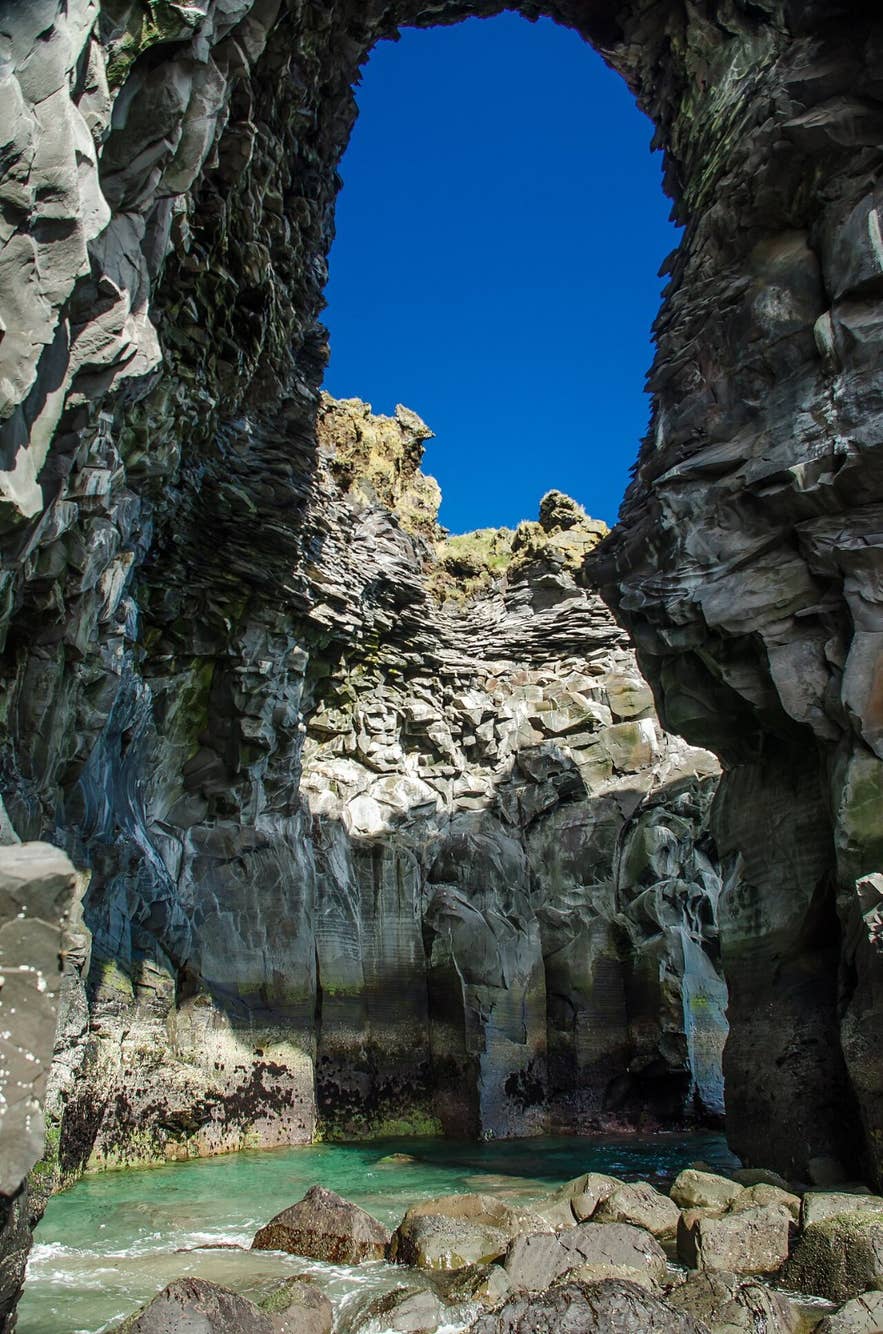
Inside Baðstofa sea cave, Hellnar. Photo: pjt56, CC BY-SA 3.0
Valasnös is the rocky headland that juts into the sea on the east side of the small cove at Hellnar, on the south coast of the Snæfellsnes peninsula in West Iceland.
Inside the headland is Baðstofa (named after the baðstofa, the main living room of the old Icelandic turf farmhouse), a sea cave whose walls change colour with the light and the tide, and whose ledges are packed with nesting seabirds in summer.
Valasnös and Baðstofa cave sit at the Hellnar end of the coastal path to Arnarstapi and are the most photographed feature of the old fishing station.
Key Takeaways About Valasnös and Baðstofa
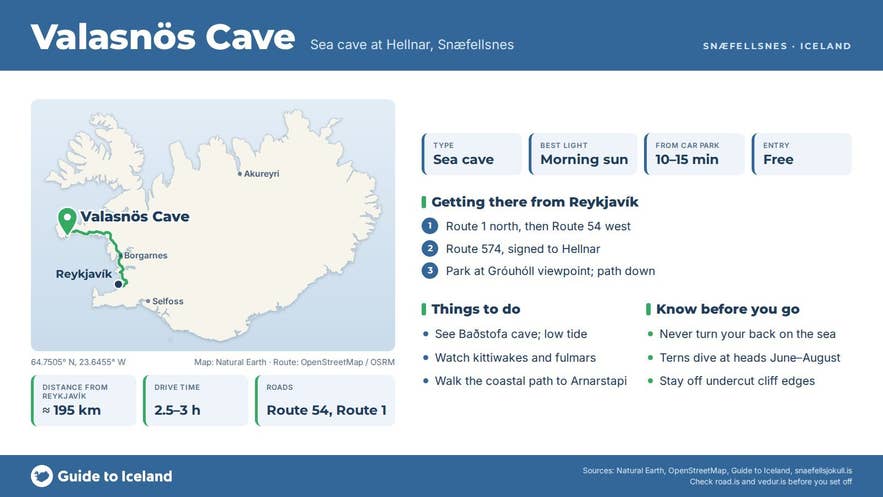
- Headland and sea cave at Hellnar cove on the south coast of Snæfellsnes, 195 km from Reykjavík
- Baðstofa cave: low tide to get close, morning sun and high tide for the strongest colours; calm seas only
- Kittiwakes, fulmars and Arctic terns nest here from late spring to August
- No entry fee; park at the Gróuhóll viewpoint and walk 10–15 minutes down; paved access, no 4x4
- The 2.5 km coastal path links Hellnar with Arnarstapi (45–60 minutes one way)
Why visit Valasnos Cave
The coast at Hellnar is made of layered lava flows that the sea has cut back into cliffs, arches and caves.
The lava above the shore, Hellnahraun, came from a crater near Jökulháls, now under the Snæfellsjökull ice cap, about 3,900 years ago.
At Valasnös the waves have worked into the headland from both sides, and the result is a cavern open to the sky and the sea.
- Baðstofa cave. The cave is known above all for its light. Sunlight bounces off the water inside and up onto the walls, so the colours shift through the day and with the state of the tide. Local guides rate the colours highest in early-morning sun around high tide; low tide is when you can get closest to the mouth.
- Birds. Kittiwakes, fulmars and Arctic terns nest on the ledges and in the grass above from late spring until August, and the noise and smell of the colony are part of the visit.
- History. Hellnar was one of the largest fishing stations on Snæfellsnes for centuries, first recorded as a fishing station in 1560; the 1703 census counted 194 people here. The cove below Valasnös was the landing place, and today it holds a small concrete pier and the Fjöruhúsið café.
- Protected coast. The shore between Arnarstapi and Hellnar has been a protected nature reserve since 1979, and Hellnar lies just outside the eastern boundary of Snæfellsjökull National Park.
A short distance west is Bárðarlaug, a small tarn in a cinder cone that is tied to the legend of Bárður Snæfellsás and was protected in 1980. A cold spring at the lava edge is known as Gvendarbrunnur or Maríulind.
How to get to Valasnos Cave
Hellnar is on Route 574, the road around the tip of Snæfellsnes, about 5 km west of Arnarstapi.
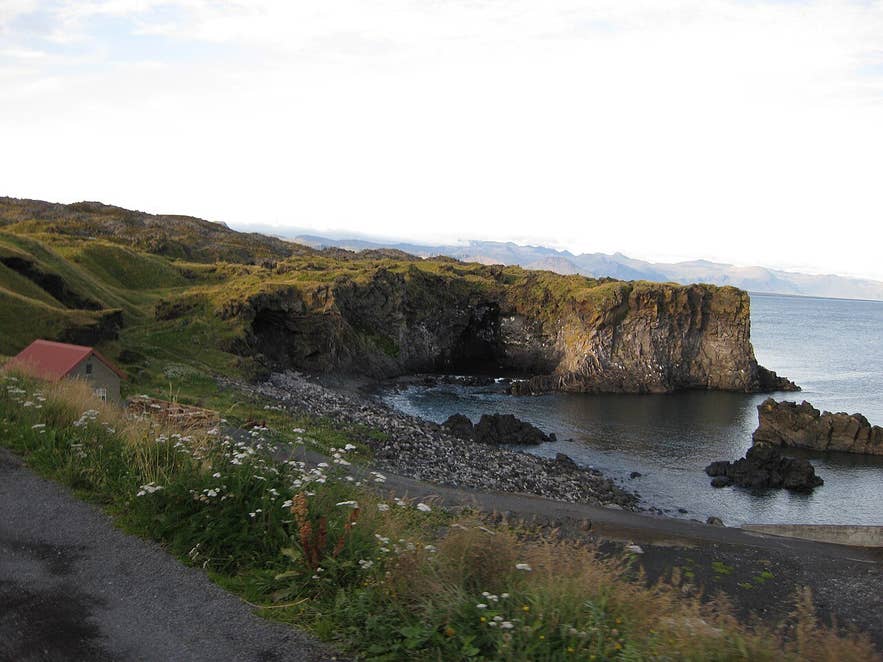
Valasnös and Baðstofa cave from Hellnar. Photo: Salvör Gissurardóttir, public domain
- From Reykjavík: about 195 km, 2.5 to 3 hours. Take Route 1 north, Route 54 along the south side of Snæfellsnes, then Route 574 at Vegamót or via Búðir, and follow signs to Hellnar.
- From Arnarstapi: 5 km, 5 minutes by car, or 2.5 km on foot along the coastal path, 45 to 60 minutes one way.
- From Ólafsvík: about 41 km, 35 to 40 minutes on Route 574 around the peninsula past Djúpalónssandur and Lóndrangar.
Turn off Route 574 into Hellnar and drive down to the car park at the Gróuhóll viewpoint above the shore (no charge at the time of writing; check the signs, as the national park car parks nearby charge a service fee).
From there a rocky path drops to the cove in 10 to 15 minutes; Valasnös is the headland on your left as you face the sea, and Baðstofa cave is in its seaward end. There is also a small parking area down by the café.
The approach is paved to the village; no 4x4 is needed and there are no F-roads.
Best time to visit
June and July combine the bird colony at its busiest, long daylight and the best chance of calm seas. Check the tide tables: low tide to get close to the cave, high tide and morning sun for the strongest colours. May and August are quieter and still good.
In winter the path can be icy and the cave is reached only in calm weather, but the light on the cliffs at low sun is striking. The Arnarstapi to Hellnar walk is pleasant in any season when the ground is dry.
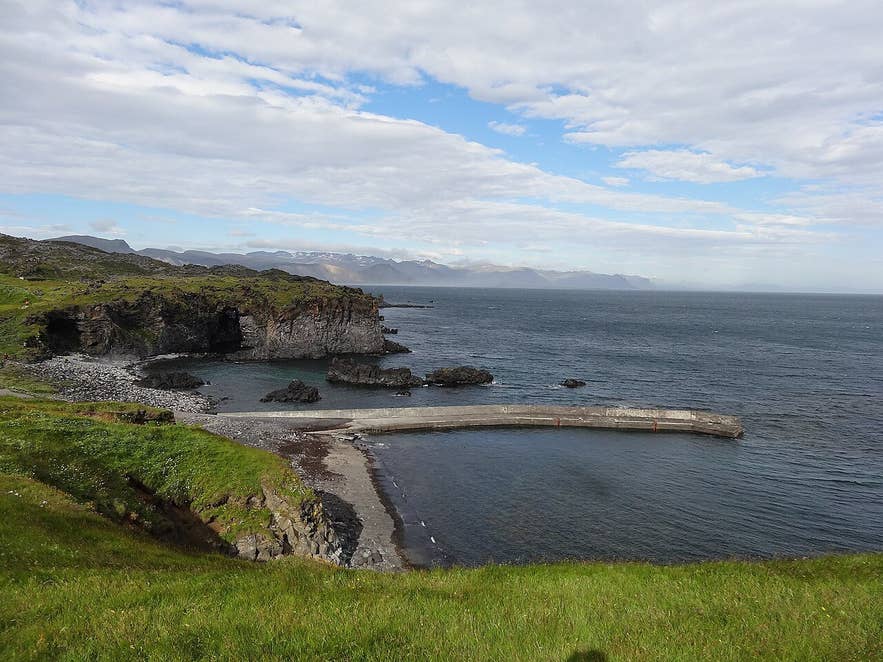
Hellnar cove and Valasnös cliffs. Photo: Klaus Nahr, CC BY-SA 2.0
Safety and practical tips
- Stay off the cliff edges; the lava is undercut and crumbles. The sea here is open Atlantic with sudden large waves. Never turn your back on it on the rocks below the cave.
- Arctic terns dive at heads near their nests from June to August. Hold a hand or stick above your head and move on.
- The path from the car park is rocky and uneven; wear shoes with grip.
- There is no fee and no opening hours. Toilets are at the café in summer; the national park's visitor centres, with toilets open all day, are at Malarrif and Hellissandur further west.
- Fjöruhúsið café on the shore opens seasonally (roughly Easter to October; check current hours); Fosshotel Hellnar and a second café are up in the village.
- Drone flying needs a permit inside the national park, and drones should be kept away from the bird cliffs in nesting season.
Nearby attractions
- Hellnar View Point - 0.1 km, the Gróuhóll viewpoint and car park above the cove
- Fjöruhúsið café - 0.1 km, on the shore
- Hellnar Church - 0.3 km
- Bárðarlaug - 2 km, protected tarn in a cinder cone
- Arnarstapi - 2 km, at the other end of the coastal path
- Gatklettur - 2 km, rock arch at Arnarstapi
- Lóndrangar - 7 km, basalt sea stacks
- Vatnshellir Cave - 9 km, lava tube with guided tours
Tours that visit Valasnos Cave
- Super Jeep Tour to Snaefellsnes for the 2026 Solar Eclipse from Reykjavik - stops at Hellnar, which offers views of Valasnös and Baðstofa cave.
- Customizable 8-Day Summer Self-Drive Tour of Iceland's Westfjords & Snaefellsnes Peninsula - the itinerary passes Hellnar and suggests checking Valasnös, the protruding cliff.
- 5-Day Iceland South Coast Getaway - a package whose Snæfellsnes day describes Hellnar as home to Baðstofa cave.