Few places on Earth offer such surreal and varied formations within a single compact country as Iceland does. From basalt columns to sea stacks that resemble trolls, Iceland's landscapes are wild, weird, and wonderfully photogenic.
A variety of Iceland’s rock formations are free to visit and easily reachable by renting a car or joining guided day tours. Many of these top sights are located on the South Coast, the Snaefellsnes Peninsula, and the Highlands.
Why You Can Trust Our Content
Guide to Iceland is the most trusted travel platform in Iceland, helping millions of visitors each year. All our content is written and reviewed by local experts who are deeply familiar with Iceland. You can count on us for accurate, up-to-date, and trustworthy travel advice.
Some formations require a short hike, while others invite you to pause roadside and just look. But each offers a moment of awe, a chance to reflect, and a glimpse into Iceland’s raw, ancient power.
This guide highlights the must-see rock formations in Iceland, so you’ll know exactly where to go, what to expect, and how to get there. Keep reading to plan a trip filled with nature’s most spectacular natural wonders and otherworldly landscapes.
- Discover the Complete Guide to Volcanoes in Iceland
Quick Facts About Iceland’s Rock Formations
-
Iceland’s rock formations are shaped by volcanic eruptions, glacial rivers, and coastal erosion.
-
The most popular rock formations in Iceland include Studlagil Canyon, Svartifoss, Reynisdrangar, and Dyrholaey.
-
The best way to explore Iceland’s rock formations is by rental car or guided tour.
-
Most formations are free to visit, but some may require 4-wheel drive access or charge a small parking fee.
-
The best time to visit is between May and September for full access and lush scenery.
How Iceland’s Unique Rock Formations Were Created
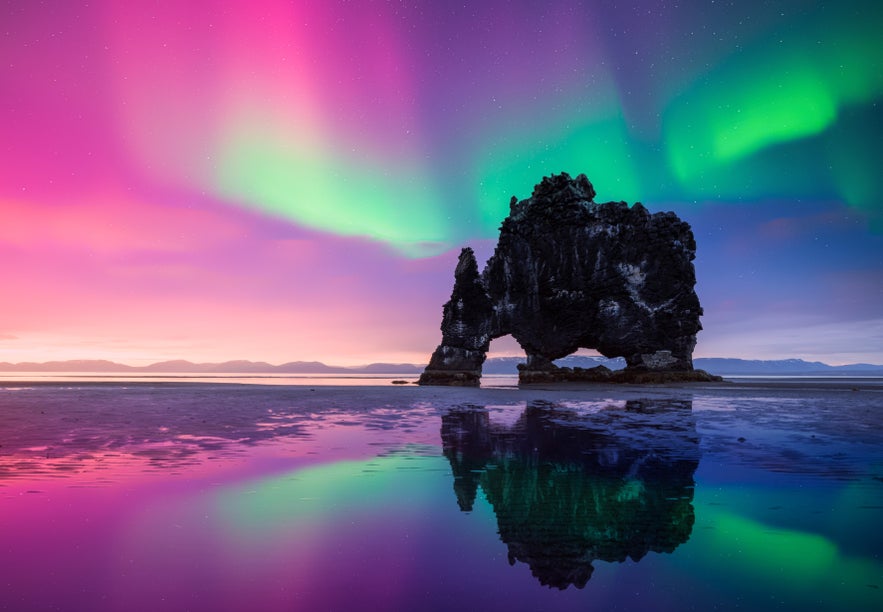 Iceland's dramatic rock formations are shaped by powerful natural forces working over thousands of years. The island sits where two tectonic plates meet, so it's constantly shaped by volcanic activity, shifting crust, and geothermal heat.
When lava cools quickly, especially after hitting air or water, it can crack into geometric patterns. This is how the famous basalt columns are formed. Elsewhere, erosion plays a key role. Glaciers, waves, wind, and melting ice gradually wear down softer rock, leaving behind towering sea stacks, arches, and caves.
These natural sculptures highlight Iceland’s dynamic geology and inspire Icelandic folklore, lending the landscape its mystical and magical character.
Types of Rock Formations in Iceland
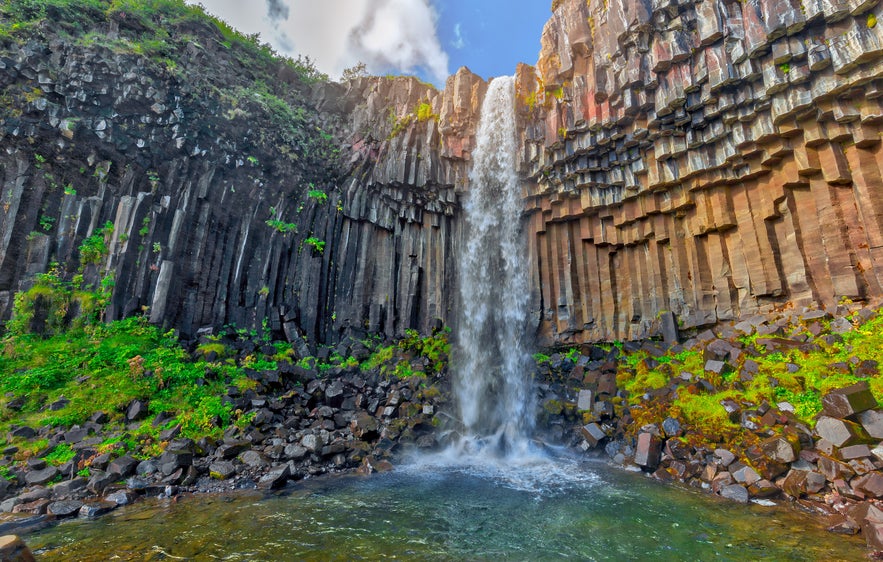 From hexagonal basalt columns to jagged sea stacks and twisted lava fields, Iceland’s rock formations come in strikingly different forms. Each type reveals a different chapter in the island’s geological story, shaped by volcanic eruptions, cooling lava, and centuries of erosion. Here's a look at the most iconic types you’ll encounter.
-
Basalt Columns: These striking, hexagonal pillars form when lava cools rapidly and cracks into patterns. You’ll see them at Svartifoss Waterfall and Reynisfjara Beach near Vik.
-
Sea Stacks: Formed by centuries of erosion, these offshore towers rise from the sea. Reynisdrangar near Vik and Hvitserkur in the north are among the most iconic.
-
Lava Fields and Craters: Rugged and mossy, these landscapes are frozen reminders of past eruptions. Explore Dimmuborgir’s endless lava fields or the Surtshellir lava cave.
-
Rock Arches and Cliffs: Sculpted by waves, these formations form dramatic natural bridges and walls. Don’t miss Dyrholaey’s sea arch or the towering Latrabjarg cliffs.
-
Canyons and Gorges: Shaped by glacial rivers, Iceland’s canyons are narrow, steep, and stunning. Fjadrargljufur and Studlagil Canyon are especially photogenic.
Each of these formations adds a sense of wonder to your journey, perfect for slow walks, shared awe, and memorable photos.
- See also: Top Amazing Canyons in Iceland
The Top 15 Rock Formations in Iceland
Ready to explore Iceland’s wildest shapes and stony showstoppers? Pick your favorite for an Instagram shot, a proposal backdrop, a touch of Icelandic mystery, or simply a place of awe. Here are 15 rock formations that prove Iceland is truly out of this world.
15. Kalfshamarsvik Basalt Columns
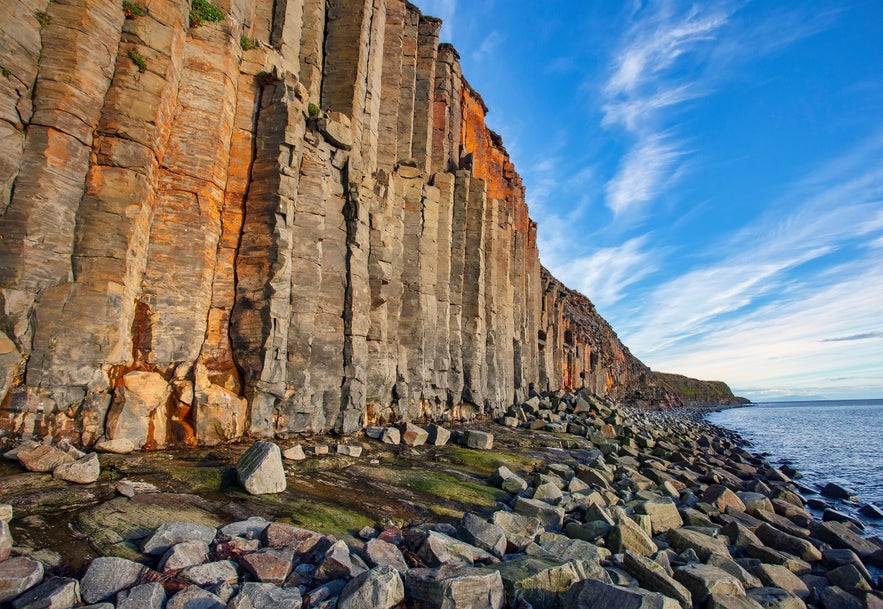 One of the must-see rock formations in Iceland is Kalfshamarsvik, a secluded cove on the Skagi Peninsula in North Iceland. Here, the basalt columns form one of the most mesmerizing coastal scenes in the country. The lava here cooled into perfect hexagonal shapes that stack and step down toward the ocean like a natural sculpture garden.
To reach Kalfshamarsvik from Reykjavik, drive north on Route 1 for about 174 miles (280 km), then turn onto Route 74 near the town of Skagastrond. From there, continue for roughly 22 miles (36 km) on a gravel road to the coast. The road is usually accessible in summer, and there’s a small parking area near the lighthouse.
From the parking area, short walking paths lead to the basalt formations and scenic coastal viewpoints. Visit during low tide to get closer to the base of the columns.
14. Yoda Cave (Giggjagja)
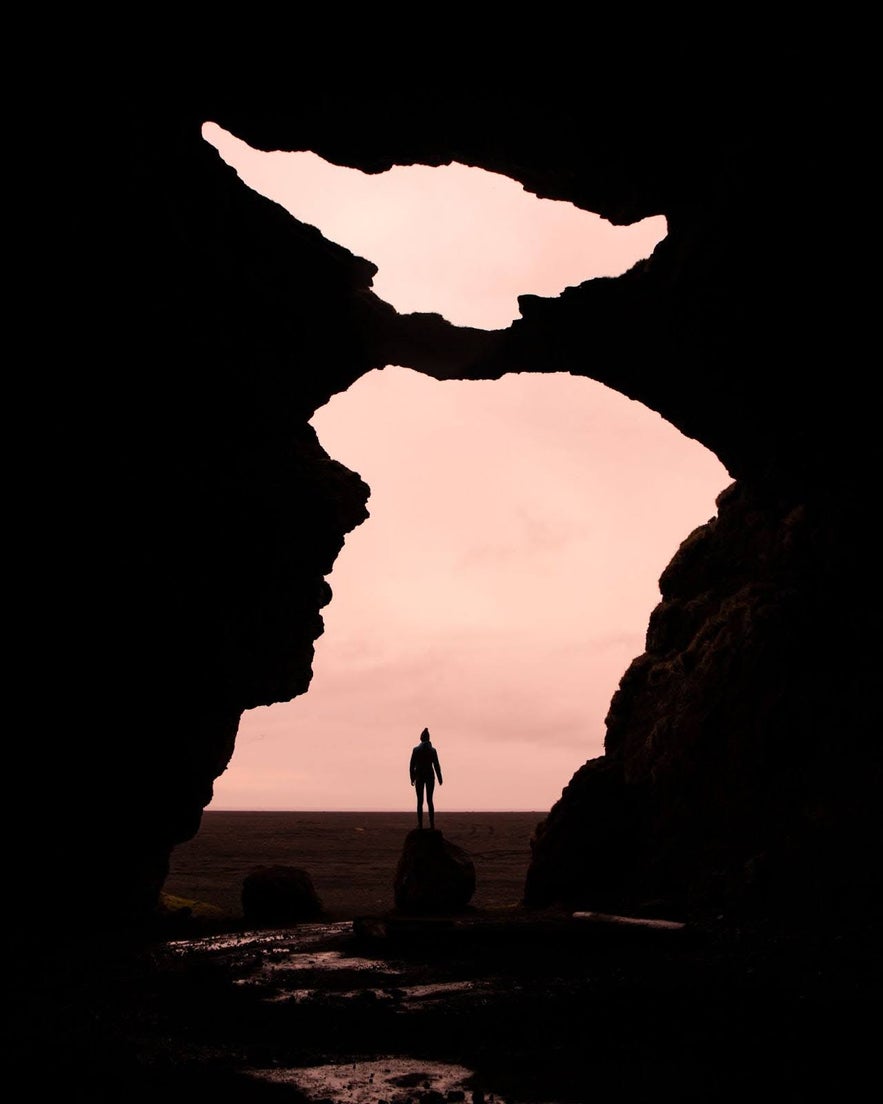 For quirky rock formations in Iceland, Yoda Cave is a fun and unique stop near Vik on Iceland’s south coast, known for its entrance that resembles Yoda’s face when viewed from a specific angle. You can see the outline of his eyes, ears, and head when standing inside the cave and looking outward. It’s part of a lava field on private land but is freely accessible.
The cave is located just off Route 1 near Hjorleifshofdi. A short path from the parking area leads to the cave entrance. The best view is from just inside the entrance, slightly off-center. Visit on a cloudy day for softer, more diffused light.
13. Aldeyjarfoss Waterfall
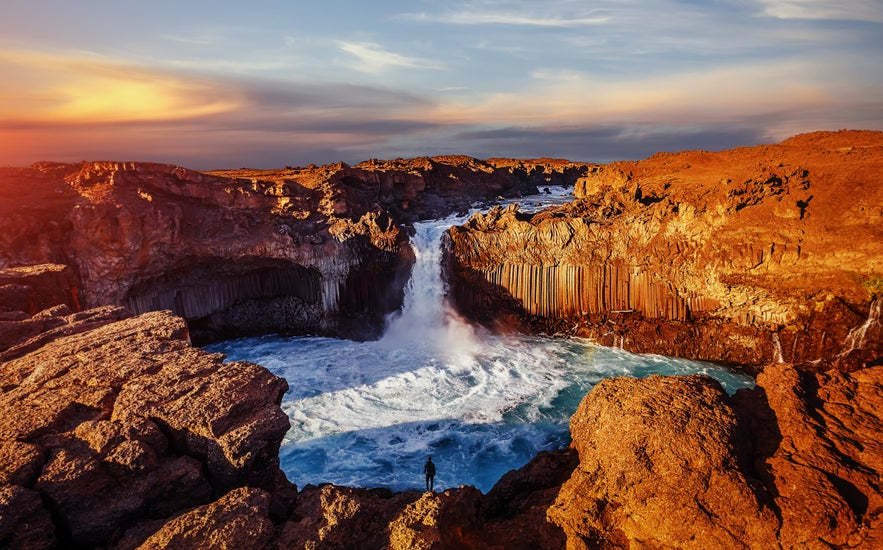 Aldeyjarfoss delivers one of the most breathtaking contrasts in Iceland. Thundering white water crashes through a perfect wall of jet-black basalt columns. The lava-shaped hexagons frame the waterfall like a natural coliseum, giving the whole scene a bold, almost surreal symmetry.
Located in North Iceland, Aldeyjarfoss is easily accessible from Akureyri, a popular base for exploring the region. From there, drive into the Bardardalur Valley and follow Route 842, which connects to F26, a gravel Highland road.
You’ll need a 4x4 for the rough terrain, but it’s worth every bump. The final stretch leads to a small parking area, with a short trail to the viewpoint. Visit in summer for the best access.
13. Surtshellir Lava Cave
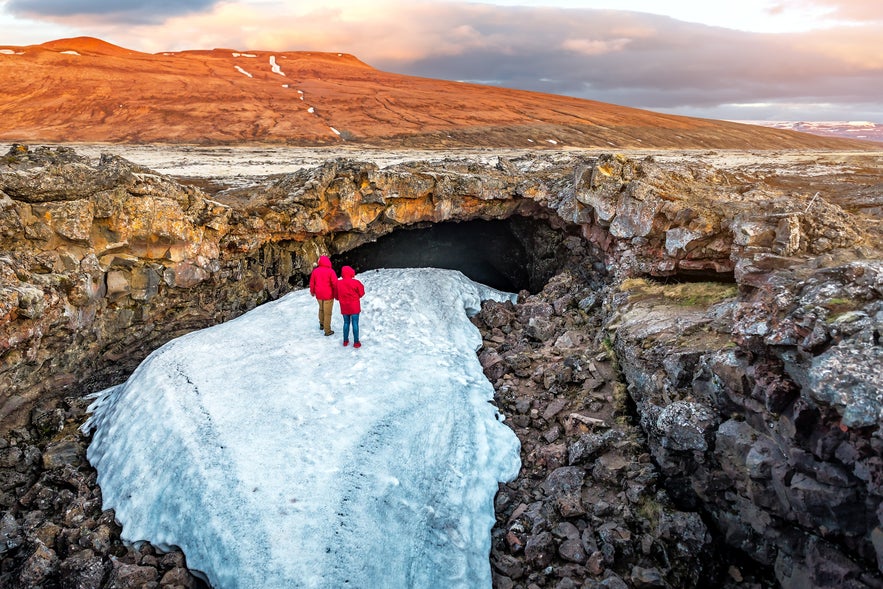 Surtshellir is one of Iceland’s longest lava caves, stretching over 1 mile (1.5 km) beneath a rugged lava field in Hallmundarhraun. Named after Surtr, the fire giant from Norse mythology, it’s a place steeped in legend. Locals once believed it sheltered outlaws and demons. Today, it’s a wild, pitch-black tunnel into Iceland’s volcanic past.
The cave lies in West Iceland near Hraunfossar Waterfalls. It's a worthwhile stop on a self-drive tour of West and South Iceland via the Golden Circle route. Before crossing the bridge into Borgarnes, turn right onto Route 50, then follow Route 518 past Husafell to reach the cave.
A 4x4 is essential, since the gravel roads are rough. Inside, the cave opens into twisting lava tunnels and seasonal ice sculptures. It’s eerie, thrilling, and a powerful example of Iceland’s rock formations in their rawest and most dramatic form.
11. Svartifoss Waterfall
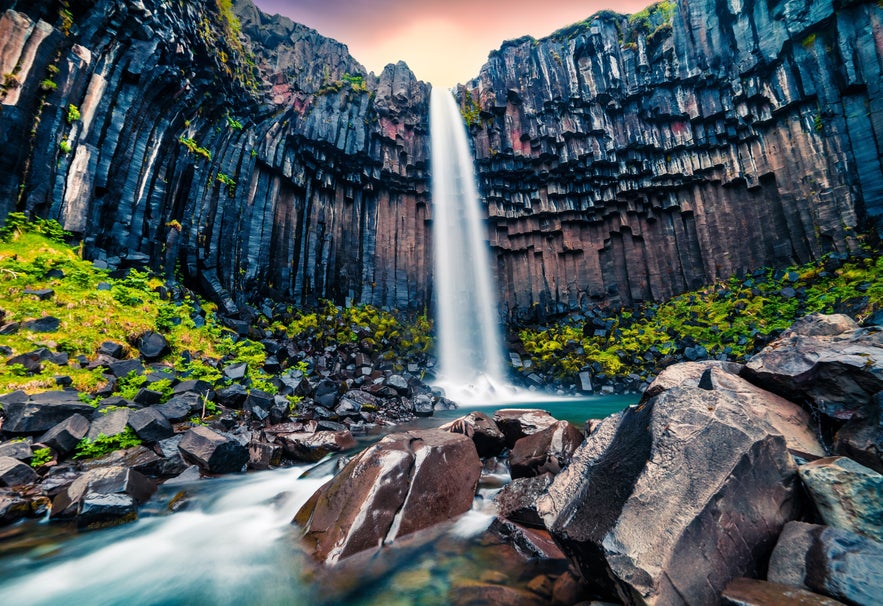 Among the most breathtaking rock formations in Iceland, Svartifoss stands out. This elegant waterfall drops straight over a wall of black basalt, with perfectly shaped pillars fanned out like organ pipes. The contrast of white water against deep volcanic rock makes it one of Iceland’s most photogenic falls.
To reach it, head into Skaftafell Nature Reserve in Vatnajokull National Park, which is about a 4.5 to 5-hour drive from Reykjavik (around 199 miles / 320 km) along Iceland’s south coast. From the visitor center, follow the well-marked trail uphill for about 45 minutes.
The hike is scenic and steady, with several viewpoints along the way. Visit in the morning or late afternoon for the best light on the columns.
10. Dimmuborgir Rock Formations
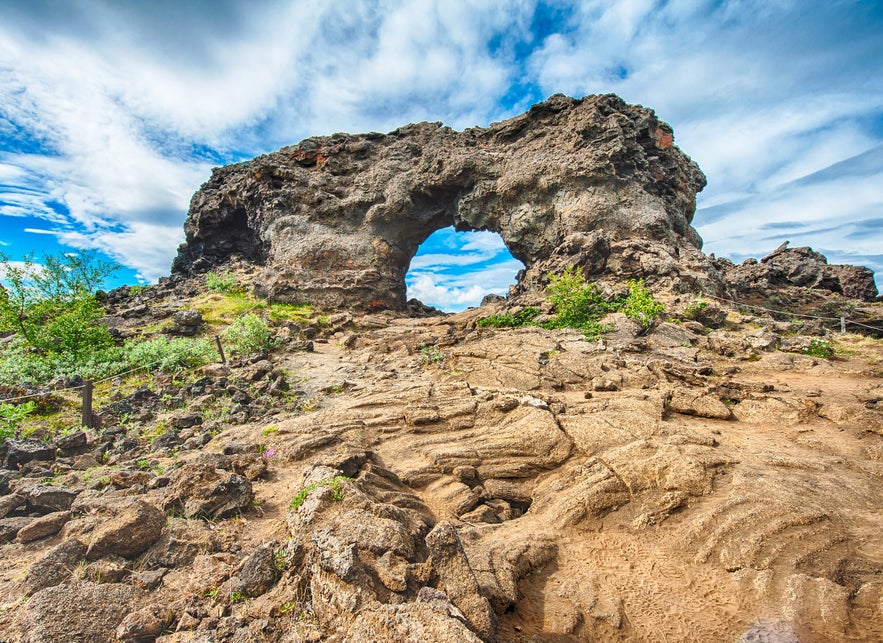 Dimmuborgir, meaning “Dark Castles,” is a lava field featuring jagged pillars, shadowy caves, and eerie archways, located just east of Lake Myvatn. The entire area resembles a volcanic fortress. Folklore says trolls live here, and Iceland’s Yule Lads are said to visit during the holidays.
A day trip to Dimmuborgir is easiest from Akureyri in North Iceland. From there, drive east toward the village of Reykjahlid, then follow signs to the Dimmuborgir parking area. If you prefer a guided experience, a Lake Myvatn day tour from Akureyri is a convenient way to visit Dimmuborgir along with nearby waterfalls and hot springs.
Several short loops and longer trails wind through the lava formations. In fall, the rocks glow with autumn colors, while winter’s snow transforms the landscape into a storybook scene.
9. Kirkjugolf Basalt Stones
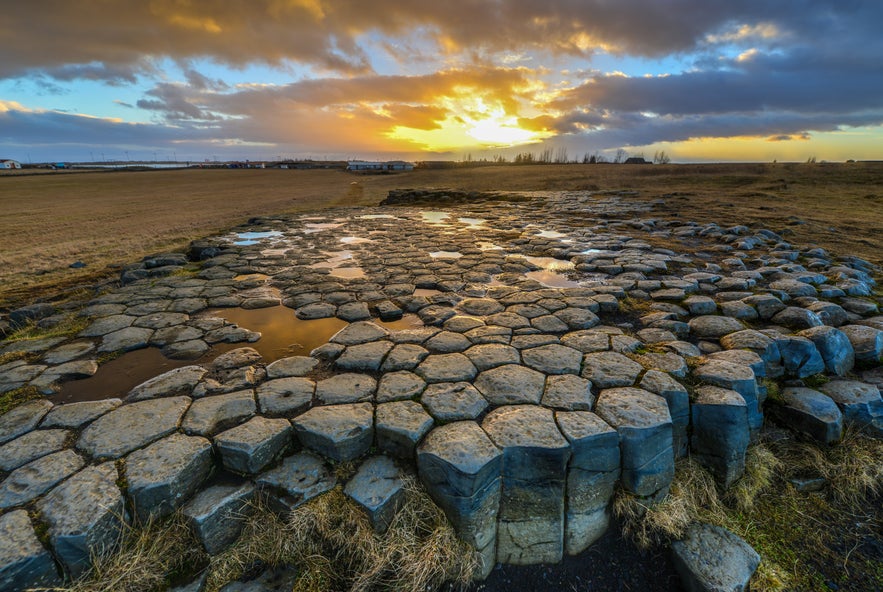 Kirkjugolf is a unique and striking example of natural rock formations in Iceland. Its name means "church floor," and the site features a strange patch of perfectly tiled ground that looks like monks once laid a stone floor in the middle of nowhere. This natural basalt pavement was revealed by centuries of erosion. It’s like Iceland’s version of optical art, built by a volcano.
To see Kirkjugolf from Reykjavik, drive about 205 miles (330 km) east along Route 1 toward the village of Kirkjubaejarklaustur. The drive takes about 4.5 to 5 hours. The site is just outside the village, with a small parking lot and a short, flat path that takes you straight to the basalt pavement.
Visit after rain when the stones shine like glass. Pair your stop with the nearby waterfalls Systrafoss or Stjornarfoss for a perfect roadside detour.
8. Gerduberg Cliffs
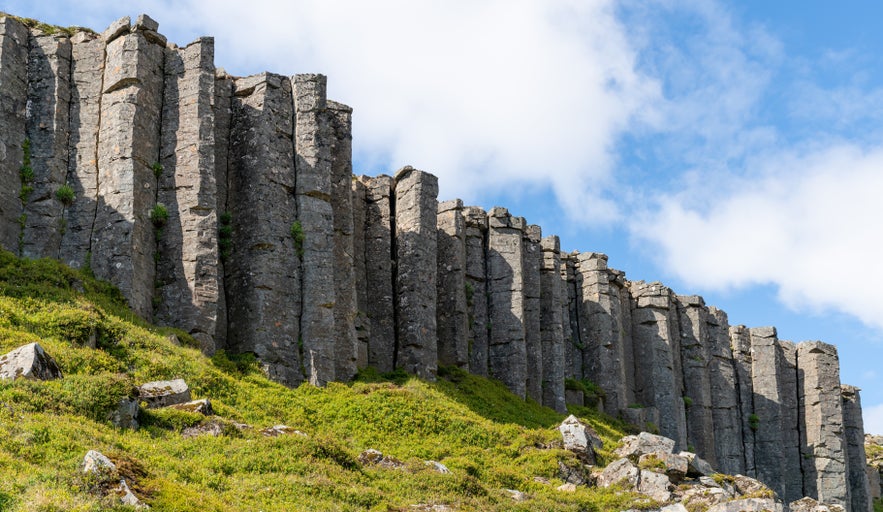 Gerduberg is a massive wall of geometric basalt columns stretching along the edge of a lava field on the Snaefellsnes Peninsula. The columns are unusually uniform, each one tall and straight like a giant's fence. It’s one of the most impressive rock formations in Iceland, a marvel of symmetry set amidst wild, rugged terrain.
Many Snaefellsnes Peninsula tours highlight well-known sites, but Gerduberg remains a hidden gem. Since it’s just off Route 54 on the Snaefellsnes Peninsula, driving yourself lets you discover this stunning basalt formation at your own pace.
There’s a parking area and a short trail that takes you right up to the base. A drone or wide-angle lens captures the full scale best, and it’s especially beautiful in evening light.
7. Elephant Rock
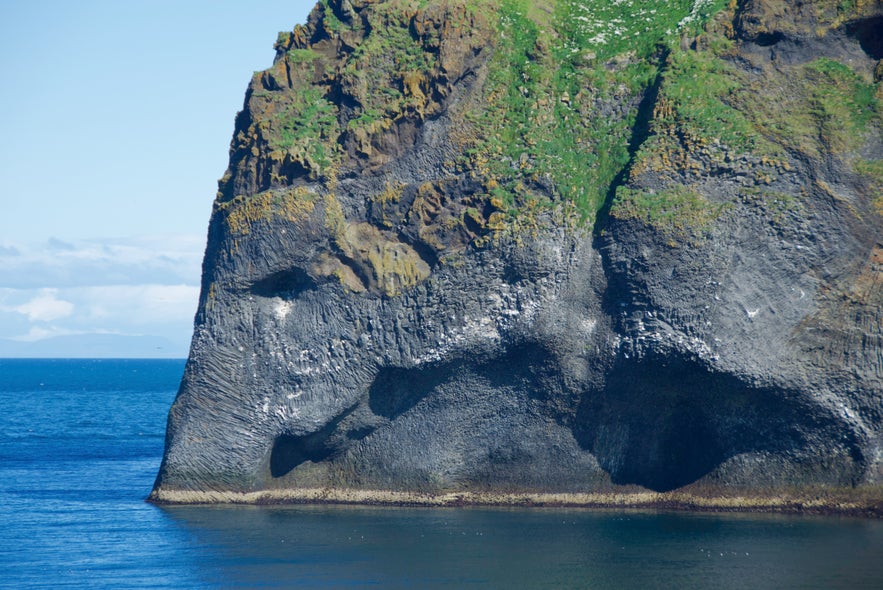 On Heimaey Island in the Westman Islands, Elephant Rock is a natural cliff that perfectly resembles an elephant’s head and trunk dipping into the sea. The basalt’s wrinkled texture gives it a lifelike appearance, making it one of the quirkiest rock formations in Iceland, especially striking when viewed from the water.
Landeyjahofn, the ferry terminal for Heimaey Island, is easily accessible. You can reach it from Reykjavik by car via Route 1 (the Ring Road) and then Route 254, or take a public bus from the Mjodd station in Kopavogur. Alternatively, join guided Westman Islands tours that include transfers.
From Heimaey, you can hike to nearby cliff viewpoints or join a scenic boat tour of the islands to see the elephant’s profile from the sea. Puffins nest nearby in summer, so bring binoculars to spot wildlife perched on the “elephant’s back.”
6. Gatklettur Rock Arch
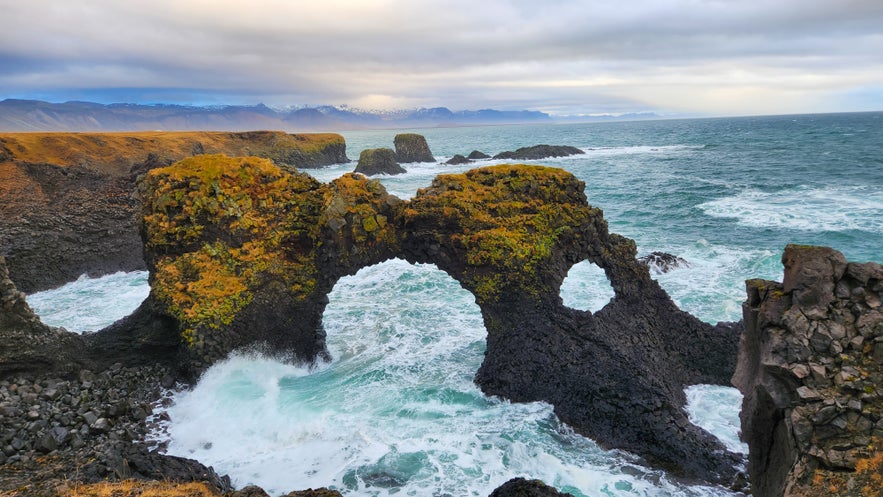 In the coastal village of Arnarstapi, waves have carved a stunning stone arch straight out of a fantasy movie. Gatklettur curves perfectly over the sea, with foamy waves crashing through and seabirds circling above. It’s one of the most photogenic rock formations in Iceland and a must-see along the Snaefellsnes Peninsula.
To get to Gatklettur from Reykjavik, take Route 1 north toward Borgarnes then follow Route 54 onto the Snaefellsnes Peninsula. Continue on Route 574 and turn into Arnarstapi, where you can park near the harbor or at the marked trailhead.
A short walk along the scenic cliffside path leads straight to the arch. Bring a wide-angle lens and visit early or late in the day for soft, golden light. Don’t miss the nearby statue of Bardur Snaefellsas overlooking the coast.
5. Londrangar Basalt Cliffs
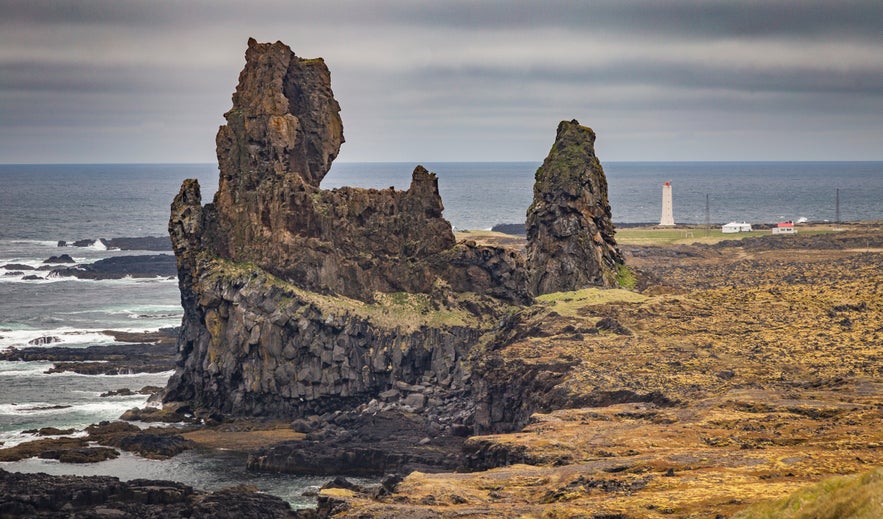 Among the most intriguing rock formations in Iceland is Londrangar, a shattered black castle rising from a lava field by the sea. These towering basalt spires are the remnants of an ancient volcanic crater, sculpted over time by wind and waves. Locals say elves live nearby, and once you’re standing beneath the cliffs, it’s easy to see why.
To get there from Reykjavik, take Route 1 north toward Borgarnes, then turn onto Route 54 to enter the Snaefellsnes Peninsula. Continue west until Route 574 branches off and loops around the peninsula’s tip. Watch for the signs to the Londrangar viewpoint near the Malarrif Visitor Center.
There’s a parking lot near Malarrif and a short, easy trail that brings you right up to the cliffs. Visit during seabird nesting season for nonstop action overhead, and aim for golden hour when the cliffs catch the light and seem to glow.
4. Dyrholaey Rock Arch
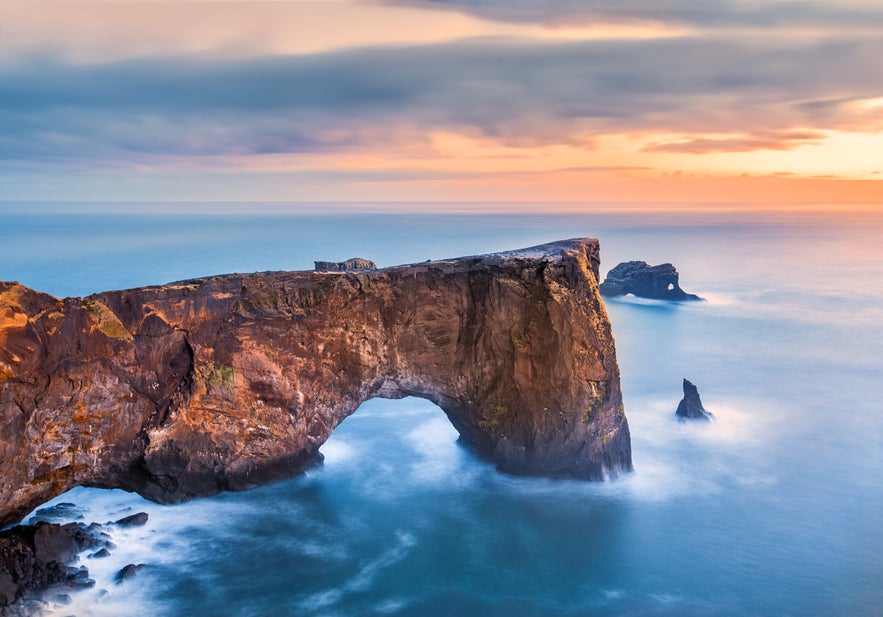 Dyrholaey is a towering coastal headland with a natural sea arch, high cliffs, and sweeping views of black sand beaches that seem to stretch forever. On clear days, you’ll spot glaciers inland while the Atlantic Ocean crashes against the cliffs below. It’s also one of Iceland’s most scenic spots to see puffins during the summer.
To reach Dyrholaey, drive along Route 1 and turn onto Route 218 (Dyrholavegur), approximately 6 miles (10 km) west of Vik. The road leads to two main areas: a lower parking lot near Kirkjufjara Beach and an upper viewpoint by the Dyrholaey Lighthouse.
Visiting both lets you experience different perspectives and photo opportunities of Dyrholaey’s unique landscape. While the road is generally accessible by most vehicles in summer, a 4x4 is recommended in winter.
3. Hvitserkur Rock Formation
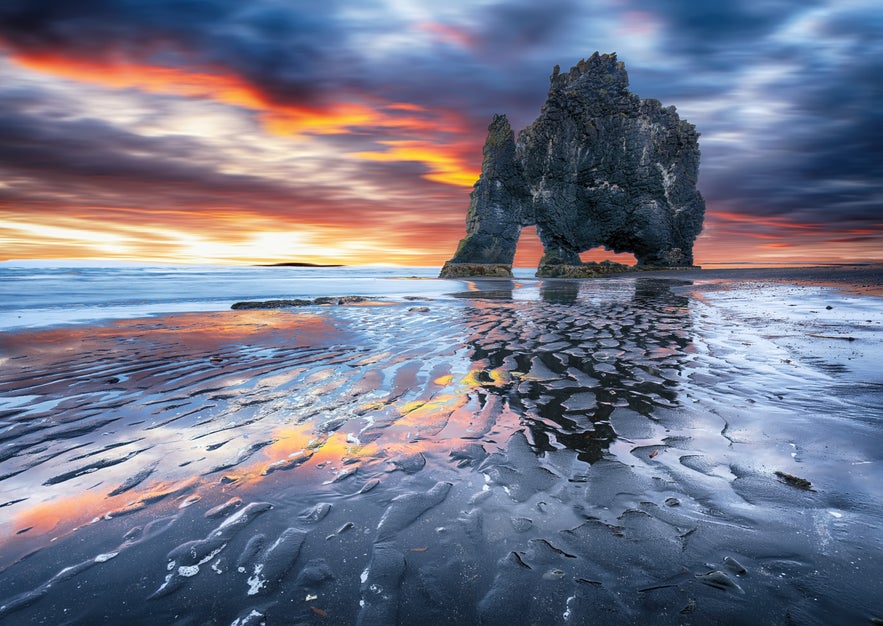 If you want to see one of the most dramatic coastal rock formations in Iceland, Hvitserkur is hard to beat. This 15-meter sea stack on the Vatnsnes Peninsula in Northwest Iceland looks like a dragon or dinosaur drinking from the ocean. Erosion carved arches into its base, giving it a skeletal, otherworldly shape.
To reach Hvitserkur from Reykjavik, drive 122 miles (196 km) north along Route 1 (the Ring Road) until you arrive in the town of Hvammstangi. From there, follow Route 711 to the marked viewpoint. A steep trail leads down to the beach, best visited at low tide for closer views.
Seabirds nest there in summer, often filling the stack with fluttering activity. Bring a zoom lens for bird photos or go wide to capture the full silhouette against the sea.
2. Reynisdrangar Basalt Sea Stacks
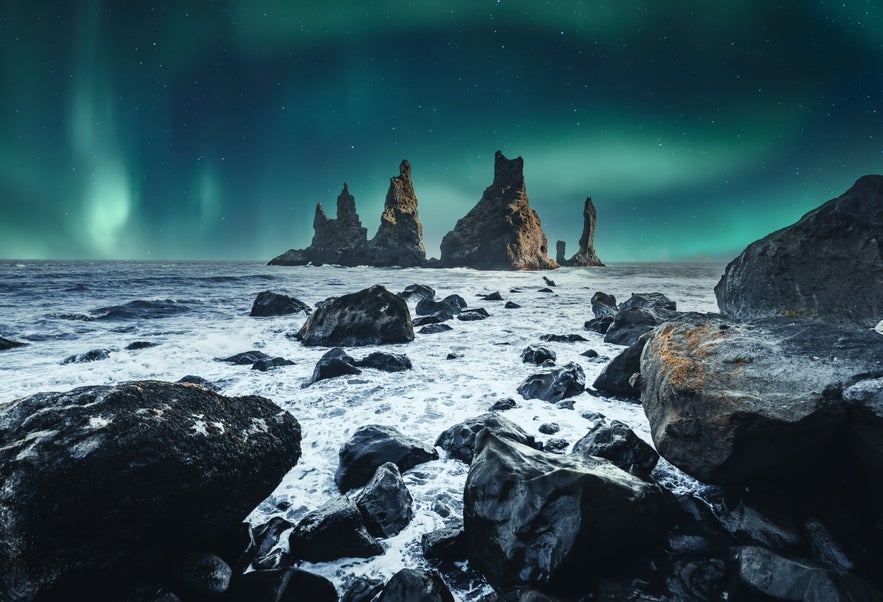 Among the rock formations in Iceland that are steeped in legend and natural beauty are the towering sea stacks of Reynisdrangar. According to folklore, these were trolls caught by the sunrise and frozen forever in the surf. Rising like jagged spears just offshore from the village of Vik on the South Coast, they cut a dramatic silhouette against the black sands of Reynisfjara Beach and the wild Atlantic beyond.
To reach Reynisfjara from Reykjavik, drive southeast along Route 1 (the Ring Road) for about 115 miles (185 km). You’ll pass through towns like Hveragerdi and Selfoss before arriving near Vik. Just before the village, follow signs on your right to Reynisfjara Beach.
Park near the Reynisfjara Visitor Center and cafe, then follow the short path to the shore. Stay well back from the water, as this beach is known for its powerful sneaker waves. For capturing the sea stacks cutting through the mist, a telephoto lens will help you get stunning close-ups while keeping a safe distance.
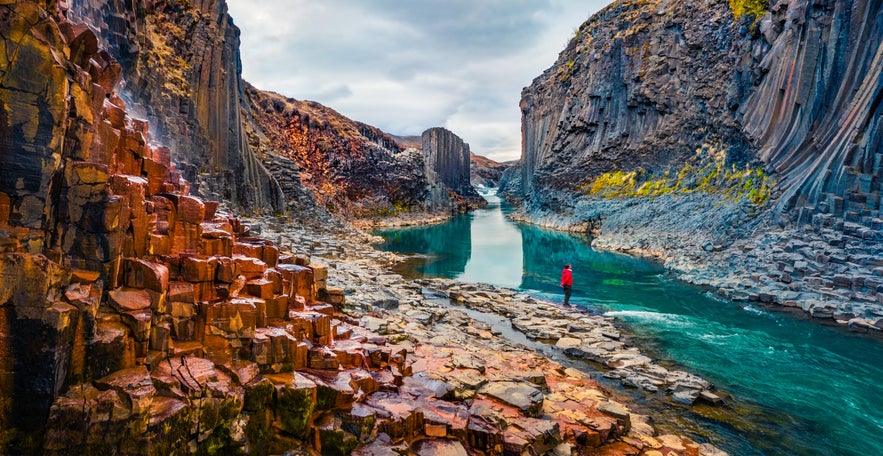
1. Studlagil Canyon
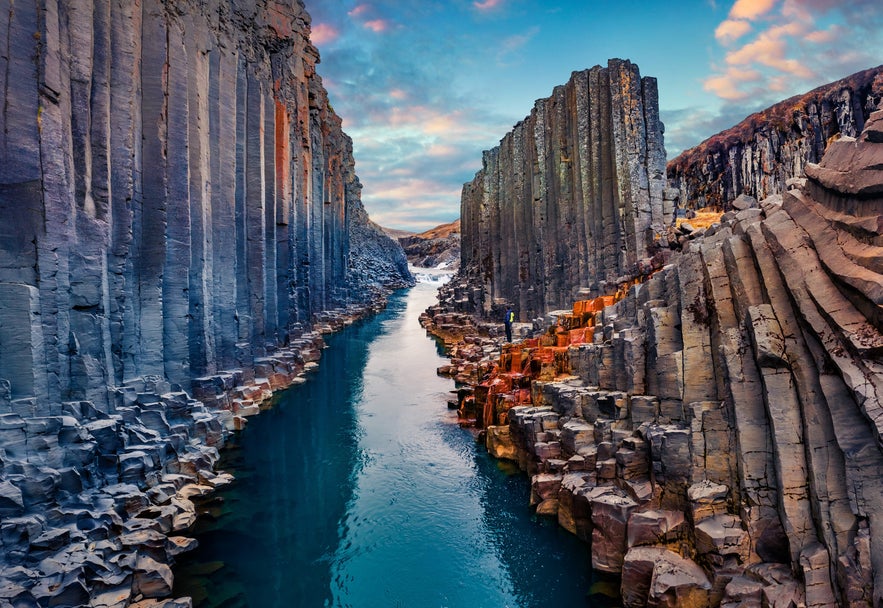 At the top of the list of must-visit rock formations in Iceland is Studlagil Canyon, an awe-inspiring geological masterpiece built over centuries of volcanic activity and erosion.
Towering basalt columns rise in perfect rows above a glacial blue river, creating a scene that looks straight out of a fantasy. Hidden for centuries, this natural wonder was only revealed when a hydro project lowered the water level, exposing its jaw-dropping beauty.
A road trip along the Ring Road with a stop in East Iceland is just one way to experience the canyon up close. If you're based in Egilsstadir, you can also join a private tour of Studlagil Canyon, which includes round-trip transportation. Whichever option you choose, Studlagil Canyon is one of the best places to visit in East Iceland.
The hike down to the canyon floor is steep but worth every step. Visit in summer when the river glows its brightest. Wear sturdy shoes and take your time exploring every corner.
Best Routes and Tours to Iceland’s Rock Formations
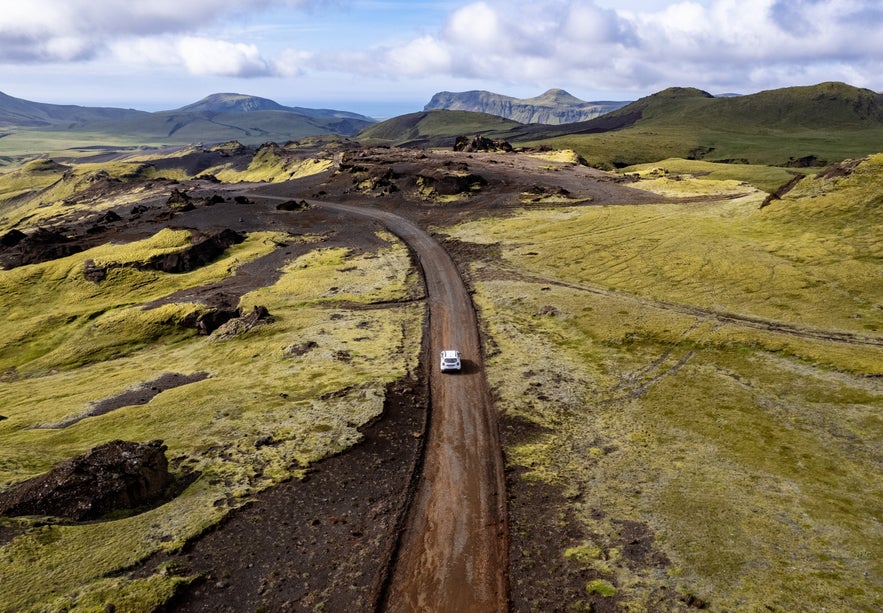
There are several ways to explore Iceland’s rock formations, depending on your travel style, schedule, and sense of adventure. Renting a car is the most convenient option, giving you the freedom to stop at lava fields, basalt cliffs, and remote canyons whenever the scenery demands your attention.
If you prefer a more organized experience, you can choose from guided day tours, multi-day adventures, or all-inclusive vacation packages. Each option offers a different way to connect with Iceland’s dramatic landscapes.
Self-Drive Tours
For those who want flexibility and adventure when exploring Iceland’s rock formations, self-drive tours are the ideal choice. These tours combine expert planning with the freedom to customize your route, letting you stop at must-see basalt cliffs, sea stacks, and canyons whenever you want for photos or hikes.
-
5-Day South Iceland Tour with the Golden Circle and Blue Lagoon: Drive the scenic South Coast, stopping at Reynisfjara, Dyrholaey, and the Skogafoss Waterfall and more.
-
7-Day Complete Ring Road Self-Drive: Circle the island at your own pace and discover highlights like Hvitserkur rock, Studlagil canyon, and the Snaefellsnes cliffs.
-
12-Day Self-Drive of the Ring Road with National Parks: Take your time exploring the entire Ring Road, including volcanic landscapes in Myvatn and the red craters of Raudholar.
Guided Multi-Day Tours
Guided multi-day tours take you deep into Iceland’s wilderness with a knowledgeable local guide who knows all the best viewpoints and hidden rock formations. Check out these popular tours that provide comfortable transport and insider access to Iceland’s most stunning geological sites.
-
2-Day West Iceland Tour: Discover lava caves, cliffs, and canyon baths in West Iceland, ideal for seeing diverse rock formations in a short time.
-
1-Week Ring Road & Snaefellsnes Tour: Explore sea stacks, volcanic craters, and basalt cliffs from the Golden Circle to the Snaefellsnes Peninsula.
-
11-Day Winter Ring Road Tour: Visit Iceland’s geological icons dusted in snow, with added stops at rock formations and lesser-known gems.
Day Tours
Day tours are perfect if you’re short on time but want to see some of Iceland's most impressive rock formations with expert commentary and convenient departures. Here are some top-rated day tours to explore Iceland’s stunning rock formations.
-
Studlagil and Vok Baths Summer Tour from Egilsstadir: Combine a visit to the iconic basalt canyon with a relaxing soak in geothermal pools.
-
2-Hour Helicopter Tour from Reykjavik: See the Golden Circle, volcanic ridges, and remote cliffs from above, with several landings for a closer look.
-
South Coast Waterfalls & Black Sand Beach Day Trip: Discover the black sand beach and Reynisfjara, plus waterfalls and sea cliffs nearby.
Vacation Packages
For a hassle-free way to explore Iceland’s most iconic rock formations, vacation packages combine accommodations, tours, and transportation into one seamless itinerary. These packages are designed to take you to basalt cliffs, sea stacks, volcanic formations, and canyons with ease and expert guidance.
-
7-Day Icelandic Wonders Package: A customizable trip where you can include activities that highlight Iceland’s geological gems.
-
10-Day Ring Road of Iceland with Top Activities: Travel around the island with an expert, stopping at waterfalls, basalt beaches, and lava fields.
-
11-Day Summer Ring Road Vacation with Guide: Explore rock formations across Iceland with a knowledgeable guide and thoughtfully arranged stays.
- Read more: Ultimate Guide to Road Trips in Iceland
- Find the: Best Advice For Renting a Car in Iceland
Make Space for Iceland’s Rock Formations on Your Bucket List
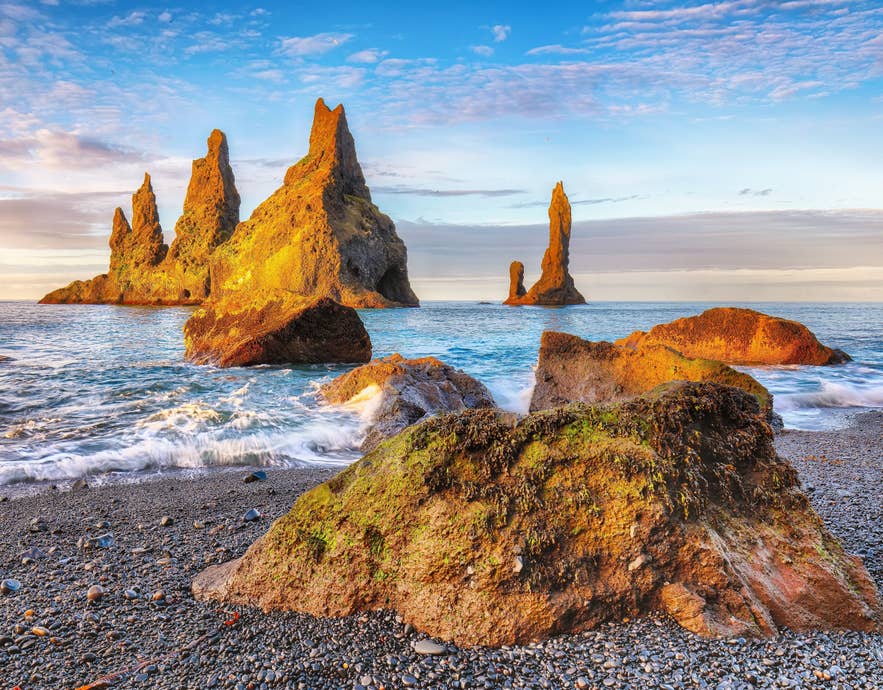
Iceland’s rock formations are more than geological marvels. They bring texture, mystery, and drama to the landscape, whether it’s towering basalt cliffs, mossy lava fields, or surreal sea stacks rising from the ocean.
Each one tells a story shaped by volcanoes, glaciers, and time. They’re just one striking part of Iceland’s landscapes, which change dramatically from region to region and season to season.
If you're planning a scenic getaway or an otherworldly adventure, be sure to make space in your itinerary for a few of these natural wonders. They're perfect for slow walks, stunning photos, or just standing still in awe. From north to south, these stone icons in Iceland belong on every traveler’s must-see list.
冰岛的岩石地貌可以安全攀爬吗?
请务必遵守告示牌指引,并走指定步道或观景平台。如果你想拍到震撼景色或寻找绝佳取景点,建议选择官方徒步路线,或参加导览团,以更安全、负责任的方式体验。
什么时候最适合去看冰岛的岩石地貌?
在冰岛的岩石地貌景点可以用无人机拍摄吗?
自驾公路旅行能看到冰岛的岩石地貌吗?
冰岛的岩石地貌景点需要门票吗?
冰岛的岩石地貌适合带小孩或年长旅客去吗?
但对于较难抵达的地貌,例如斯图德拉吉尔峡谷(Studlagil Canyon)(需要一段不长但较陡的徒步),或阿尔德亚瀑布(Aldeyjarfoss)(需走较颠簸的道路并徒步进入),就要评估自身体力与徒步能力,并提前规划。
去冰岛看岩石地貌应该带什么?
冰岛的岩石地貌附近可以露营吗?
Which of these wild and incredible rock formations in Iceland would you explore first? Did we miss one of your favorites? Drop us a comment and share your must-see Icelandic rock spots!

I was born on the west side of Reykjavík and grew up downtown, so Iceland has been my back yard for most of my life. I'm a father of two, I've traveled on five continents, and I still haven't found a country that holds my attention the way this one does.
That's why I co-founded Guide to Iceland. We connect travelers directly with Icelandic operators, guides and hosts, so the advice and the services both come from people who actually live here.
I write about the practical side of a trip: what eating out in Reykjavík really costs, whether to pick Sky Lagoon or Hvammsvík, where to stop for food along the Ring Road, and which regions give you the best odds of clear skies for the northern lights. If you're planning a trip and something doesn't add up, message me.